
Largo Carlos Amarante, in Braga
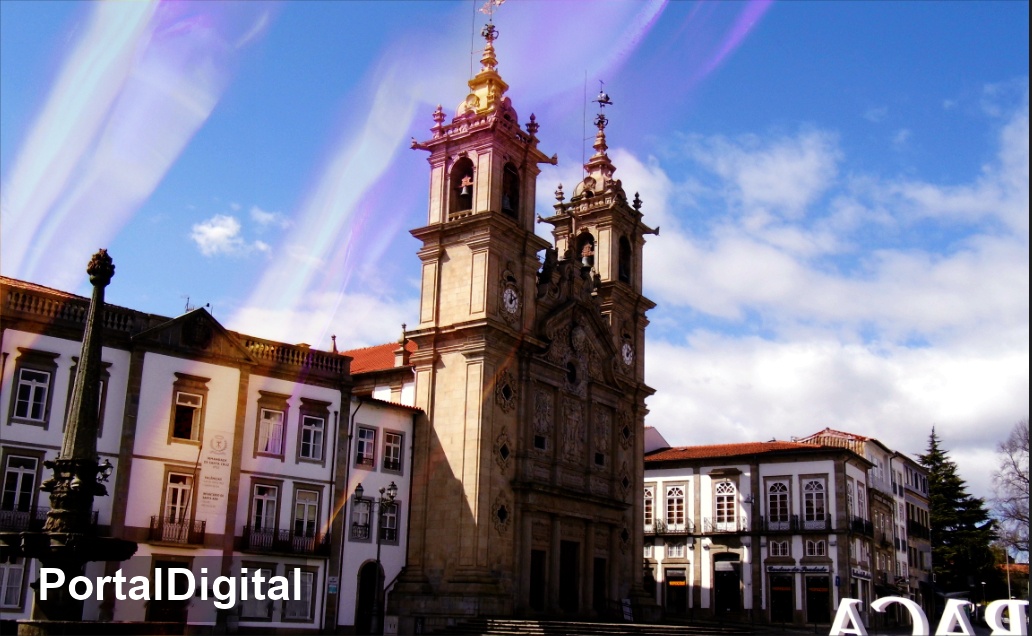
The church of Santa Cruz is located in Largo Carlos Amarante, in the city center, Braga, northern Portugal.
The Church was built by the founder of the Confraria de Santa Cruz, Jerónimo Portilo, which was later granted the title of Royal Brotherhood by King D. João VI (1816-26).
The Church was built by the founder of the Confraria de Santa Cruz, Jerónimo Portilo, which was later granted the title of Royal Brotherhood by King D. João VI (1816-26).
Construction
Construction began in 1625 but only ended in 1737 and, therefore, we can find Mannerist and Baroque architectural elements here.
The initial project is due to Francisco Vaz and the costs were paid thanks to alms from devotees of Passos do Senhor.
Inside, highlights include the stone-worked vaults, the quality work on the organ and pulpits and all the gilded decoration dating from the 17th century. XVIII.
The initial project is due to Francisco Vaz and the costs were paid thanks to alms from devotees of Passos do Senhor.
Inside, highlights include the stone-worked vaults, the quality work on the organ and pulpits and all the gilded decoration dating from the 17th century. XVIII.
Renovations
Built in the Baroque and Mannerist style of the 17th century, the Church of Santa Cruz was rebuilt less than 100 years later, as it was in danger of collapsing.
Facade
The facade, which still remains from the “first version” of the church, was restored in 2000 and is the most beautiful of all the churches in Braga.
Interior
Inside, built in the 17th century, in the Mannerist baroque style, it has unusual gilded carvings, highlighting the vaults worked in stone, the quality work on the organ and pulpits and all the gilded decoration dating from the 17th century. XVIII.
The interior of the church was designed by Frei José de Santo António Vilaça and the exterior is entirely made of worked stone with central symmetry.
The architects of the Church were the reverend architect Geraldo Álvares, the master builder Francisco Vaz, the graduate João Dias Leite and the Reverend Pedro de Coimbra Andrade. The central part of the facade is divided into two registers, finished with a finned pediment.
On the first level, four fluted Doric columns with a frieze entablature feature, in bas-relief, the instruments of the Passion of Christ, with the figure of the rooster at each end, which evokes Peter's denial.
On the second level, four fluted Ionic pilasters, with an entablature interrupted by an oculus that extends towards the pediment. The panels feature ornamental paintings (the lateral ones above windows): in the center, the Holy Cross with resplendence and two banners with crossed masts; on the left side, a fruit tree (the tree of Paradise); on the right side, a palm tree with a royal crown.
On the pediment, three medallions surround the oculus. The upper one has the coat of arms of D. João VI, placed when he, on October 11, 1822, elevated the brotherhood of Santa Cruz to the category of Royal.
Crowning the ensemble are three sculptures: Saint Helena supporting the Cross, flanked by two genuflecting figures, in armor and cloak, with the scepter and crown at their feet (they are believed to represent Emperor Constantine and D. Afonso Henriques).
The interior of the church was designed by Frei José de Santo António Vilaça and the exterior is entirely made of worked stone with central symmetry.
The architects of the Church were the reverend architect Geraldo Álvares, the master builder Francisco Vaz, the graduate João Dias Leite and the Reverend Pedro de Coimbra Andrade. The central part of the facade is divided into two registers, finished with a finned pediment.
On the first level, four fluted Doric columns with a frieze entablature feature, in bas-relief, the instruments of the Passion of Christ, with the figure of the rooster at each end, which evokes Peter's denial.
On the second level, four fluted Ionic pilasters, with an entablature interrupted by an oculus that extends towards the pediment. The panels feature ornamental paintings (the lateral ones above windows): in the center, the Holy Cross with resplendence and two banners with crossed masts; on the left side, a fruit tree (the tree of Paradise); on the right side, a palm tree with a royal crown.
On the pediment, three medallions surround the oculus. The upper one has the coat of arms of D. João VI, placed when he, on October 11, 1822, elevated the brotherhood of Santa Cruz to the category of Royal.
Crowning the ensemble are three sculptures: Saint Helena supporting the Cross, flanked by two genuflecting figures, in armor and cloak, with the scepter and crown at their feet (they are believed to represent Emperor Constantine and D. Afonso Henriques).