
Conde de Agrolongo Square, in Braga
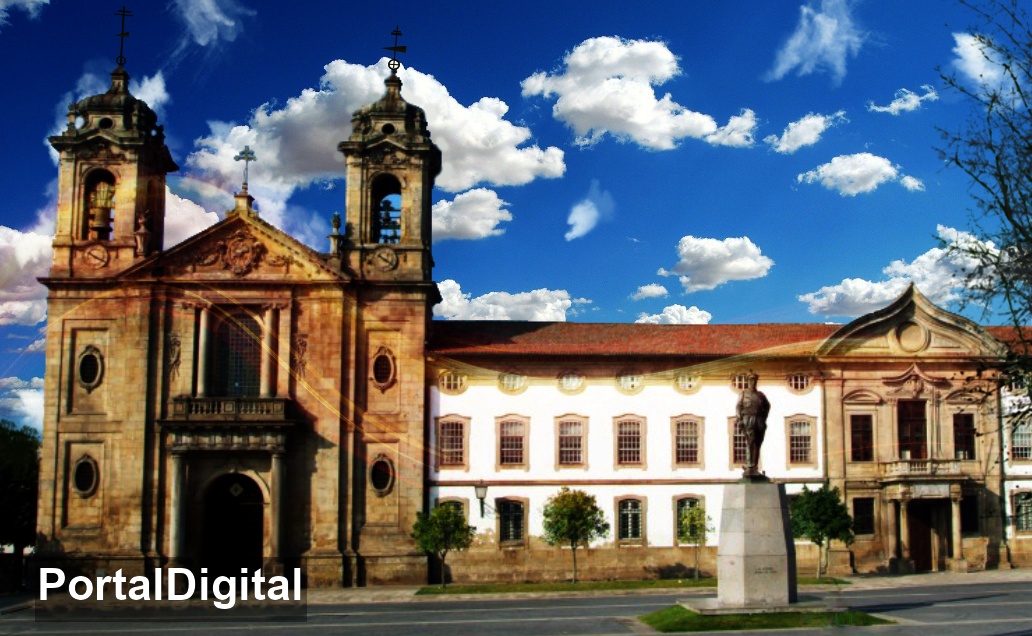
The Pópulo Church is located in Praça Conde de Agrolongo, in the parish of Maximinos, Sé and Catividade, in the city of Braga, northern Portugal.
The church was built by the archbishop of Braga, D. Frei Agostinho de Jesus de Castro and the construction of the entire complex lasted from the 16th century to the 19th century.
The church was built by the archbishop of Braga, D. Frei Agostinho de Jesus de Castro and the construction of the entire complex lasted from the 16th century to the 19th century.
The History of the Church and Convent of Pópulo
In 1595, a donation was made to the hermit friars of Santo Agostinho for the construction of the Pópulo Convent, by Archbishop D. Frei Agostinho de Jesus.
The temple was started in 1596 on the initiative of the then Archbishop of Braga, D. Frei Agostinho de Jesus (de Castro), and the construction of the entire complex lasted from the 16th century to the 19th century.
The construction of the Pópulo convent began in 1596, on the initiative of Archbishop D. Frei Agostinho de Jesus, who intended to provide a suitable place for his burial, reserving for this purpose the main chapel of the future church of Nossa Senhora da Consolação, which he granted, together with the conventual dependencies, to the religious of his own Order, the Hermits of Saint Augustine.
In November 1609, Archbishop D. Frei Agostinho de Jesus was buried in the old church of Pópulo, and the body was transferred to a wooden tomb ordered by the city of Braga and placed in an arcosolium, in the main chapel of the new church of Pópulo.
In the 18th century, much of the building, including the facade, was rebuilt and the project was designed by architect Carlos Amarante.
With the extinction of the male religious orders (1834), the complex passed into the hands of the State, with the convent's premises starting in 1841 to house an Infantry Regiment.
Currently, the convent's premises are one of the Braga City Council buildings, and guided tours are offered to appreciate the tile covering.
In 2020, the church was in severe poor condition, requiring major intervention in terms of the roofs, towers, facades, floors, ceilings, frames, high choir balustrade, organ box, etc.
The temple was started in 1596 on the initiative of the then Archbishop of Braga, D. Frei Agostinho de Jesus (de Castro), and the construction of the entire complex lasted from the 16th century to the 19th century.
The construction of the Pópulo convent began in 1596, on the initiative of Archbishop D. Frei Agostinho de Jesus, who intended to provide a suitable place for his burial, reserving for this purpose the main chapel of the future church of Nossa Senhora da Consolação, which he granted, together with the conventual dependencies, to the religious of his own Order, the Hermits of Saint Augustine.
In November 1609, Archbishop D. Frei Agostinho de Jesus was buried in the old church of Pópulo, and the body was transferred to a wooden tomb ordered by the city of Braga and placed in an arcosolium, in the main chapel of the new church of Pópulo.
In the 18th century, much of the building, including the facade, was rebuilt and the project was designed by architect Carlos Amarante.
With the extinction of the male religious orders (1834), the complex passed into the hands of the State, with the convent's premises starting in 1841 to house an Infantry Regiment.
Currently, the convent's premises are one of the Braga City Council buildings, and guided tours are offered to appreciate the tile covering.
In 2020, the church was in severe poor condition, requiring major intervention in terms of the roofs, towers, facades, floors, ceilings, frames, high choir balustrade, organ box, etc.
The Construction of the Pópulo Church and Convent
The construction of the temple began in 1596 on the initiative of the then archbishop of Braga, D. Frei Agostinho de Jesus de Castro, to be buried there.
He died in 1609, his body was transferred in 1628 to a wooden tomb ordered by the city of Braga, placed in an arcosolium in the main chapel.
Inside, the blue and white tile covering attributed to the ceramist Policarpo de Oliveira Bernardes (18th century) stands out.
He died in 1609, his body was transferred in 1628 to a wooden tomb ordered by the city of Braga, placed in an arcosolium in the main chapel.
Inside, the blue and white tile covering attributed to the ceramist Policarpo de Oliveira Bernardes (18th century) stands out.
The Pópulo Church and Convent Renovations
The initial mannerist character of the church was changed in the 17th century. XVIII, when the façade was rebuilt in neoclassical style according to Carlos Amarante's design.
The construction of the entire complex lasted from the 16th century to the 19th century.
The construction of the entire complex lasted from the 16th century to the 19th century.
The Facade of the Pópulo Church and Convent
The facade was rebuilt at the end of the 18th century as a project designed by architect Carlos Amarante and combines baroque and neoclassical elements.
It was in the context of the urban renewal of the city of Braga, which was being undertaken by the Archbishops, that the Pópulo church gained special significance, having been the subject of one of Carlos Amarante's first projects.
He designed a new façade, giving the temple a neoclassicism that not only ennobles, but also commands one of the tops of Campo da Vinha, one of Braga's squares, with an irregular shape where the convent is located.
Despite the neoclassical tendency of the facade, which was intended to articulate with the "floor style" of pre-existing architecture, points of contact with other baroque and rococo buildings in the city are evident, whose architectural elements were refined and disciplined by the hand of Carlos Amarante.
Which, ultimately, denotes his own self-taught training, based on observation of the city and architectural treatises
Currently, some City Council services are located in the convent premises.
It was in the context of the urban renewal of the city of Braga, which was being undertaken by the Archbishops, that the Pópulo church gained special significance, having been the subject of one of Carlos Amarante's first projects.
He designed a new façade, giving the temple a neoclassicism that not only ennobles, but also commands one of the tops of Campo da Vinha, one of Braga's squares, with an irregular shape where the convent is located.
Despite the neoclassical tendency of the facade, which was intended to articulate with the "floor style" of pre-existing architecture, points of contact with other baroque and rococo buildings in the city are evident, whose architectural elements were refined and disciplined by the hand of Carlos Amarante.
Which, ultimately, denotes his own self-taught training, based on observation of the city and architectural treatises
Currently, some City Council services are located in the convent premises.
The Interior of the Church and Convent of Pópulo
Inside the church the Mannerist structure remains, with barrel-vaulted roofs with stone coffers.
In this space we can see the baroque decoration, with the use of panels of figurative Joanine tiles, lateral altarpieces in national baroque.
The late-baroque altarpiece of Nossa Senhora das Dores combines neoclassical and baroque elements, seeking symmetry with the remaining side altarpieces, namely through the use of an archivolt finish.
The high choir has a carved guard, with a canopy similar to that of the Church of São Jerónimo de Real
The church has a longitudinal plan, with a narrow endonarthex, a single nave, deep side chapels, a rectangular main chapel and a quadrangular bell tower attached to the axis, two quadrangular bell towers, flanking the main façade of the church, and convent dependencies with an irregular plan, with a cloister, developed on the side of the church.
The neoclassical sub-choir altarpiece, the main altarpiece mixing rococo and neoclassical elements.
Some decorative elements such as the pulpits and the guards of the side chapels are still in a Mannerist style.
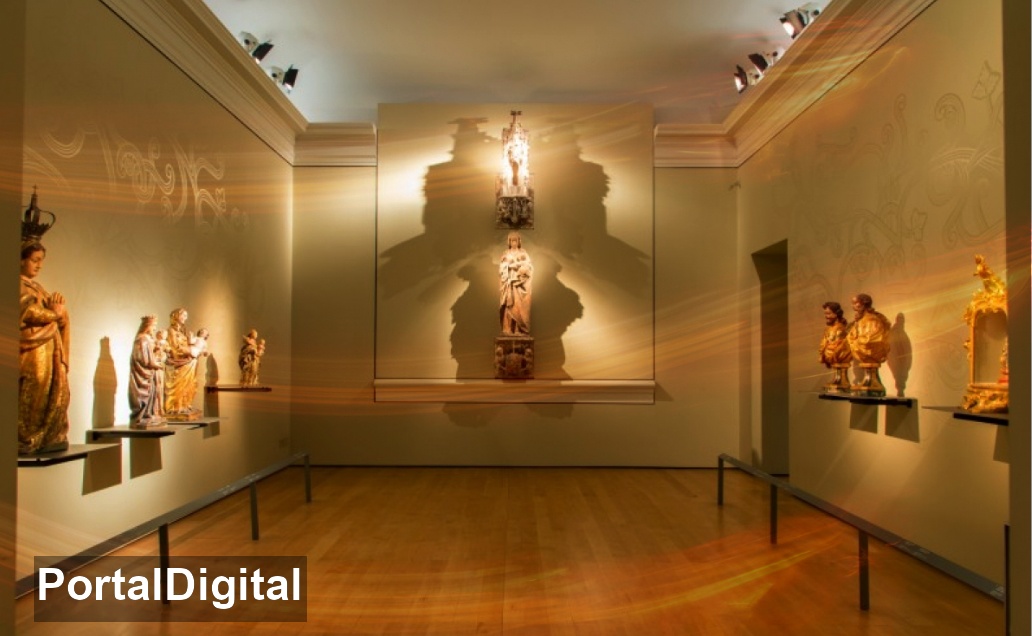
The Sacristy has a baroque lavatory, richly decorated and a reliquary altarpiece in Johannine baroque, with a rococo frame.
The interior of the convent, with a staircase richly decorated with ashlar of Joanine figurative tiles.
The Mannerist Cloister, with a full round arcade, interspersed by pilasters crowned by high pinnacles.
The interior decoration, namely the constant use of Johannine figurative tile panels and the use of gilded carving, both of excellent quality, and the existence of a small endarthex in the church, to give access to the bell towers on the front.
In the main chapel there are two arcosoliums with the remains of two Archbishops of Braga, both armed and with an inscribed cartouche.
All the lateral altarpieces are in national baroque, with the exception of a later one that seeks to use elements identical to the rest and some of these altarpieces incorporate the nave windows in their structure.
The reliquary altarpiece in the sacristy has a very exuberant rococo frame, contrasting with the interior of the niche, and with baroque decoration.
However, the Baroque intervention gave another dynamic to this space, taking advantage of the gilded altars and valances and their combination with the blue and white shine of the tiles that cover the entire walls.
All the altarpieces correspond to the so-called full baroque or national style, with the exception of that of Nossa Senhora das Dores, which already incorporates neoclassical elements and is, like that of Nossa Senhora da Conceição, attributed to the carver from Braga, Marceliano de Araújo.
A situation that is repeated in the main altarpiece, where the combination of a rococo and neoclassical language is evident in the large golden and polychrome structure that frames, on the tribune, the image of Our Lady of Pópulo.
The tiles illustrate different themes according to the invocation of the place where they are located.
In the main chapel, the panels allude to episodes in the life of Saint Augustine (c. 1730), in the chapel of the Holy Trinity they represent Veronica and Moses and the bronze serpent, in the chapels they allude to episodes in the lives of the saints to whom they are dedicated, at the entrance again references to the life of Saint Augustine; of the nave, 16 saints of the Order.
Here, a panel from the Santa Apolónia chapel deserves special mention as it was signed by António de Oliveira Bernardes, who is also credited with covering the Santa Rita chapel.
During this period, the convent facilities were also subject to renovations, and the cloister project dates back to 1706, the year in which the College hired Pascoal Fernandes and the architect Manuel Fernandes da Silva.
However, financial difficulties delayed the process, which was only completed together with a new dormitory around the year 1735.
The walls were entirely covered in panels of monochrome cobalt blue tiles, with scenes from the lives of the Saints.
The Endonarthex with lateral access to the bell towers and to the center through a wooden windshield, to the subchoir.
The High Choir rests on low arches on pilasters, indented, with a gilded and white polychrome balustrade guard, with green marbles, with a central mask, and supported on the sides by atlanteans.
In the center, a semicircular canopy, gilded and polychrome, with the same colors as the balustrade, based on Corinthian columns and decorated with plant motifs.
On the Gospel side, a large pipe organ, in gilded and polychrome carving.
The Subchoir with two holy water fonts, in the corners, with a circular cup resting on a bulging column.
Two recessed arched openings, based on Tuscan pilasters, the one on the Gospel side, providing access to the outside and the opposite side, providing access to the altarpiece chapel invoking the Lord of Agony.
The Nave is covered by a plastered barrel vault painted white with stone coffers, based on a stone cornice.
The floor is made of wooden panels, the walls are lined with pilasters, with two levels separated by a frieze, in the first six deep side chapels, three on each side, interconnected, with access through openings in a round arch, with the closing stone attached to the frieze, based on Tuscan pilasters, and the second by large windows with a carved pelmet and a balcony with an iron guard, the ones on the Epistle side. boarded up.
The side chapels have a barrel-vaulted roof, with stone coffers and paintings of plant motifs, closed by wooden guards on a balustrade made of wafers and turnings.
The Front Walls with gilded altarpieces, on the Gospel side, invoking Saint Monica, Saint Apolónia and the Holy Trinity, and on the Epistle side, Nossa Senhora da Penha, Santa Rita and Nossa Senhora das Dores.
The chapel of the Holy Trinity has an inscription and coat of arms of MAGALHÃES MACHADO MORAIS on the side wall, based on a decorative cartouche.
There are two confronting pulpits, with a rectangular base, in granite, on a corbel with a double-headed eagle, hollow wooden guards, with a balustrade made of turnings and wafers, with brass appliqués, an access door with a straight lintel, topped by a cornice, with a flat wooden canopy.
A triumphal arch, all round on Tuscan pilasters.
The raised main chapel is accessed by two stone steps, semi-enclosed by a stone balustrade. Coverage equal to the nave, with side walls with three registers.
In the first, access doors to the sacristies and two arcosoliums, with wooden tomb chests resting on three lions that each hold with their front paws a coat of arms, the one on the Gospel side, of Archbishop D. Frei Agostinho de Jesus, and the one on the Epistle side of D. Frei Aleixo de Meneses.
Both chests have a cartouche with an inscription and are topped by the Archbishop's coat of arms sculpted in polychrome relief.
In the second register, there is a large window with a granite balcony on corbels, and in the last, large windows similar to those in the nave.
The front wall is completely filled with the main altarpiece, in gilded and polychrome carving with green and pink marble.
It has a convex plan, a single axis, topped by a cornice, which rises to the center in a round arch, crowned by a bulbous dome, surrounded by angels, with an oculus in the center and surmounted by an urn with a fire.
The tribune, in a full round arch, has a throne with convex faces and a pedestal with an image of Our Lady of Pópulo, flanked by three columns on each side, of Corinthian order, demarcated in the lower third by striations, with the middle one having a pedestal with imagery. Richly decorated bench, with tabernacle in the center.
The straight Altar and Sacristies: Next to the Gospel, it has a chest in exotic wood with brass applications.
Next to the door leading to the outside, lower than the floor, a toilet with an oval bowl resting on a column with the same shape, a cut-out back, topped by a pediment with flights crowned by a cross with trevally arms.
The spouts with vegetal motifs, topped by a semicircular cup. It also has a wardrobe and a reliquary altarpiece, in gilt carving. Stoneware mosaic flooring.
The sacristy, on the Epistle side, has a chest and an octagonal table in black marble. Wooden floor, with stone grave with inscription. It communicates with the storage rooms on the upper floor via a three-flight staircase.
The entrance with ashlar tiles printed in blue and white, a front door with a straight lintel, defined by Tuscan pilasters, supporting an entablature and triangular pediment, flanked by two aedicules framed with stone images of Saint Augustine and Saint Thomas, and side walls with two doors providing access to the side wings.
Access to the upper floor through a second vestibule, with a double staircase with a wide landing, decorated with ashlar monochrome tiles in cobalt blue, with scenes from the lives of saints.
Coverage by blue and white plastered ceiling with clerestory.
From the landing, two opposing flights of stairs begin with volutes topped by granite urns with metal guards that end in a corridor leading to the side wings.
These are developed around quadrangular spaces, with the one on the right having a cloister with two-register facades, in the first full-round stonework arcade based on Tuscan pilasters, and having a Tuscan pilaster between the arches, framed topped by high pyramidal pinnacles that extend to the second register.
The arcade is topped by a frieze and cornice on which the corbels of the window balconies of the second register rest, and these have a straight lintel and topped by a straight cornice.
The interior covering of the first floor has a plastered and white-painted edge vault and a granite paved floor.
The landscaped courtyard, with geometric designs of boxwood topiaries, the wing on the left presents an interior courtyard with doors and windows in the first register and bay windows in the second, except on the side of the church where rectangular capestone windows are torn.
In this space we can see the baroque decoration, with the use of panels of figurative Joanine tiles, lateral altarpieces in national baroque.
The late-baroque altarpiece of Nossa Senhora das Dores combines neoclassical and baroque elements, seeking symmetry with the remaining side altarpieces, namely through the use of an archivolt finish.
The high choir has a carved guard, with a canopy similar to that of the Church of São Jerónimo de Real
The church has a longitudinal plan, with a narrow endonarthex, a single nave, deep side chapels, a rectangular main chapel and a quadrangular bell tower attached to the axis, two quadrangular bell towers, flanking the main façade of the church, and convent dependencies with an irregular plan, with a cloister, developed on the side of the church.
The neoclassical sub-choir altarpiece, the main altarpiece mixing rococo and neoclassical elements.
Some decorative elements such as the pulpits and the guards of the side chapels are still in a Mannerist style.
The Sacristy has a baroque lavatory, richly decorated and a reliquary altarpiece in Johannine baroque, with a rococo frame.
The interior of the convent, with a staircase richly decorated with ashlar of Joanine figurative tiles.
The Mannerist Cloister, with a full round arcade, interspersed by pilasters crowned by high pinnacles.
The interior decoration, namely the constant use of Johannine figurative tile panels and the use of gilded carving, both of excellent quality, and the existence of a small endarthex in the church, to give access to the bell towers on the front.
In the main chapel there are two arcosoliums with the remains of two Archbishops of Braga, both armed and with an inscribed cartouche.
All the lateral altarpieces are in national baroque, with the exception of a later one that seeks to use elements identical to the rest and some of these altarpieces incorporate the nave windows in their structure.
The reliquary altarpiece in the sacristy has a very exuberant rococo frame, contrasting with the interior of the niche, and with baroque decoration.
However, the Baroque intervention gave another dynamic to this space, taking advantage of the gilded altars and valances and their combination with the blue and white shine of the tiles that cover the entire walls.
All the altarpieces correspond to the so-called full baroque or national style, with the exception of that of Nossa Senhora das Dores, which already incorporates neoclassical elements and is, like that of Nossa Senhora da Conceição, attributed to the carver from Braga, Marceliano de Araújo.
A situation that is repeated in the main altarpiece, where the combination of a rococo and neoclassical language is evident in the large golden and polychrome structure that frames, on the tribune, the image of Our Lady of Pópulo.
The tiles illustrate different themes according to the invocation of the place where they are located.
In the main chapel, the panels allude to episodes in the life of Saint Augustine (c. 1730), in the chapel of the Holy Trinity they represent Veronica and Moses and the bronze serpent, in the chapels they allude to episodes in the lives of the saints to whom they are dedicated, at the entrance again references to the life of Saint Augustine; of the nave, 16 saints of the Order.
Here, a panel from the Santa Apolónia chapel deserves special mention as it was signed by António de Oliveira Bernardes, who is also credited with covering the Santa Rita chapel.
During this period, the convent facilities were also subject to renovations, and the cloister project dates back to 1706, the year in which the College hired Pascoal Fernandes and the architect Manuel Fernandes da Silva.
However, financial difficulties delayed the process, which was only completed together with a new dormitory around the year 1735.
The walls were entirely covered in panels of monochrome cobalt blue tiles, with scenes from the lives of the Saints.
The Endonarthex with lateral access to the bell towers and to the center through a wooden windshield, to the subchoir.
The High Choir rests on low arches on pilasters, indented, with a gilded and white polychrome balustrade guard, with green marbles, with a central mask, and supported on the sides by atlanteans.
In the center, a semicircular canopy, gilded and polychrome, with the same colors as the balustrade, based on Corinthian columns and decorated with plant motifs.
On the Gospel side, a large pipe organ, in gilded and polychrome carving.
The Subchoir with two holy water fonts, in the corners, with a circular cup resting on a bulging column.
Two recessed arched openings, based on Tuscan pilasters, the one on the Gospel side, providing access to the outside and the opposite side, providing access to the altarpiece chapel invoking the Lord of Agony.
The Nave is covered by a plastered barrel vault painted white with stone coffers, based on a stone cornice.
The floor is made of wooden panels, the walls are lined with pilasters, with two levels separated by a frieze, in the first six deep side chapels, three on each side, interconnected, with access through openings in a round arch, with the closing stone attached to the frieze, based on Tuscan pilasters, and the second by large windows with a carved pelmet and a balcony with an iron guard, the ones on the Epistle side. boarded up.
The side chapels have a barrel-vaulted roof, with stone coffers and paintings of plant motifs, closed by wooden guards on a balustrade made of wafers and turnings.
The Front Walls with gilded altarpieces, on the Gospel side, invoking Saint Monica, Saint Apolónia and the Holy Trinity, and on the Epistle side, Nossa Senhora da Penha, Santa Rita and Nossa Senhora das Dores.
The chapel of the Holy Trinity has an inscription and coat of arms of MAGALHÃES MACHADO MORAIS on the side wall, based on a decorative cartouche.
There are two confronting pulpits, with a rectangular base, in granite, on a corbel with a double-headed eagle, hollow wooden guards, with a balustrade made of turnings and wafers, with brass appliqués, an access door with a straight lintel, topped by a cornice, with a flat wooden canopy.
A triumphal arch, all round on Tuscan pilasters.
The raised main chapel is accessed by two stone steps, semi-enclosed by a stone balustrade. Coverage equal to the nave, with side walls with three registers.
In the first, access doors to the sacristies and two arcosoliums, with wooden tomb chests resting on three lions that each hold with their front paws a coat of arms, the one on the Gospel side, of Archbishop D. Frei Agostinho de Jesus, and the one on the Epistle side of D. Frei Aleixo de Meneses.
Both chests have a cartouche with an inscription and are topped by the Archbishop's coat of arms sculpted in polychrome relief.
In the second register, there is a large window with a granite balcony on corbels, and in the last, large windows similar to those in the nave.
The front wall is completely filled with the main altarpiece, in gilded and polychrome carving with green and pink marble.
It has a convex plan, a single axis, topped by a cornice, which rises to the center in a round arch, crowned by a bulbous dome, surrounded by angels, with an oculus in the center and surmounted by an urn with a fire.
The tribune, in a full round arch, has a throne with convex faces and a pedestal with an image of Our Lady of Pópulo, flanked by three columns on each side, of Corinthian order, demarcated in the lower third by striations, with the middle one having a pedestal with imagery. Richly decorated bench, with tabernacle in the center.
The straight Altar and Sacristies: Next to the Gospel, it has a chest in exotic wood with brass applications.
Next to the door leading to the outside, lower than the floor, a toilet with an oval bowl resting on a column with the same shape, a cut-out back, topped by a pediment with flights crowned by a cross with trevally arms.
The spouts with vegetal motifs, topped by a semicircular cup. It also has a wardrobe and a reliquary altarpiece, in gilt carving. Stoneware mosaic flooring.
The sacristy, on the Epistle side, has a chest and an octagonal table in black marble. Wooden floor, with stone grave with inscription. It communicates with the storage rooms on the upper floor via a three-flight staircase.
The entrance with ashlar tiles printed in blue and white, a front door with a straight lintel, defined by Tuscan pilasters, supporting an entablature and triangular pediment, flanked by two aedicules framed with stone images of Saint Augustine and Saint Thomas, and side walls with two doors providing access to the side wings.
Access to the upper floor through a second vestibule, with a double staircase with a wide landing, decorated with ashlar monochrome tiles in cobalt blue, with scenes from the lives of saints.
Coverage by blue and white plastered ceiling with clerestory.
From the landing, two opposing flights of stairs begin with volutes topped by granite urns with metal guards that end in a corridor leading to the side wings.
These are developed around quadrangular spaces, with the one on the right having a cloister with two-register facades, in the first full-round stonework arcade based on Tuscan pilasters, and having a Tuscan pilaster between the arches, framed topped by high pyramidal pinnacles that extend to the second register.
The arcade is topped by a frieze and cornice on which the corbels of the window balconies of the second register rest, and these have a straight lintel and topped by a straight cornice.
The interior covering of the first floor has a plastered and white-painted edge vault and a granite paved floor.
The landscaped courtyard, with geometric designs of boxwood topiaries, the wing on the left presents an interior courtyard with doors and windows in the first register and bay windows in the second, except on the side of the church where rectangular capestone windows are torn.
The Characteristics of the Conventual Dependencies of the Church and Convent of Pópulo
The outbuildings have facades plastered and painted white.
The main facade faces W., with a prominent stonework base, framed by Tuscan pillared corners, topped by a wide frieze and cornice, under a projecting eaves.
In the center, a stonework panel, with two registers, framed by colossal Tuscan pilasters, with a borronymic pediment finish, with a covered circular oculus, in the tympanum.
In the first register, main portal with a straight lintel flanked by rectangular windows, and framed by columns that support the balcony of the second register, with a granite balustrade and a straight lintel opening topped by a stone coat of arms and a counter-curved cornice, flanked by large windows topped with a curved pediment.
The side panels, with three registers, with a stone frieze separating the first two. The first register has double-hung and grilled windows, the second has guillotine-shaped windows and the third oculus, these being partially superimposed on the trim frieze. Remaining facades plastered and painted white, regularly torn by straight lintel openings, topped by eaves.
The main facade faces W., with a prominent stonework base, framed by Tuscan pillared corners, topped by a wide frieze and cornice, under a projecting eaves.
In the center, a stonework panel, with two registers, framed by colossal Tuscan pilasters, with a borronymic pediment finish, with a covered circular oculus, in the tympanum.
In the first register, main portal with a straight lintel flanked by rectangular windows, and framed by columns that support the balcony of the second register, with a granite balustrade and a straight lintel opening topped by a stone coat of arms and a counter-curved cornice, flanked by large windows topped with a curved pediment.
The side panels, with three registers, with a stone frieze separating the first two. The first register has double-hung and grilled windows, the second has guillotine-shaped windows and the third oculus, these being partially superimposed on the trim frieze. Remaining facades plastered and painted white, regularly torn by straight lintel openings, topped by eaves.