
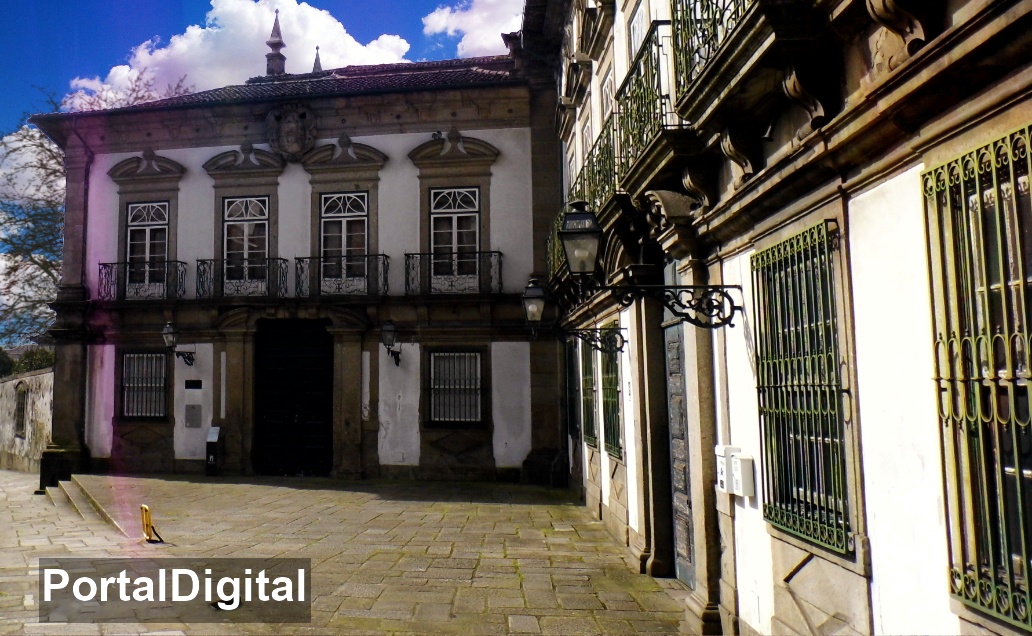
Rua dos Biscaínhos, in Braga
The Palácio dos Biscainhos is located in the parish of Sé, city and municipality of Braga, northern Portugal.
Created in 1978, the Biscaínhos Museum is housed in the palace with the same name, built in the 17th century and which served as housing, among others, for the Counts of Bertiandos, an important family of Portuguese nobility; He also received King D. Luís I.
The Palácio dos Biscainhos was built in 1712 by the architect and master bricklayer Manuel Fernandes da Silva, at the behest of Deão Francisco Pereira da Silva, as his home. The manor residence was expanded by the following owners, such as the Counts of Bertiandos, and the building even received King D. Luís I in its facilities, which reflects the importance that this noble family and the palace enjoyed at the time.
The museum presents the public with several spaces that reveal the daily life of the Portuguese nobility between the 17th and 19th centuries.
In addition to its one-hectare garden dating back to the 18th century, one of the most important from the Baroque era, what attracts most attention is the beauty of the palace and the collections found there.
The Biscainhos Museum, integrated into the Biscainhos Palace, was once a house of nobility dating back to the 17th century. XVII, it is located very close to the Arco da Porta Nova and the Braga Cathedral.
In 1963, the 3rd Viscount of Paço de Nespereira, last owner of the building and also a member of the Bertiandos family, passed away and donated the entire complex to the city of Braga. In 1978, the building gave way to the Biscainhos Museum, allowing all visitors to have access to large halls, luxurious ceilings and baroque gardens, hallmarks of 18th century nobility.
In the 19th century it was owned by the second counts of Bertiandos and their daughter, D. Maria da Conceição Eugénia, was married to D. João Lobo Machado Cardoso do Amaral e Meneses, 2nd viscount of Paço de Nespereira, former civil governor of Braga.
Its last owner, Dr. Gaspar José Maria Lobo Machado do Amaral Cardoso de Menezes, 3rd viscount of Paço de Nespereira and lord of the Casa dos Lobo Machado in Guimarães, died on July 10, 1963, having, on the eve of his death, donated his assets to the city.
It has been classified as a Property of Public Interest since 1949.
This aristocratic palace, with large halls, luxurious ceilings, baroque gardens, reveals the daily life of the 18th century nobility, as well as references to the lives of the other inhabitants of the space: servants, slaves and chaplains.
The particularly unusual ribbed pavement on the ground floor allowed carriages to enter the building to disembark passengers and proceed to the stables.
The garden, formed around 1750, is considered one of the most important historical gardens of the Baroque period in Portugal.
The space, measuring approximately one hectare, is divided into the "terreiro", "formal garden", "orchard and vegetable gardens" ("parterres"), "enclosure of the walls", "sugarcane plantation" and "largo do pombal", and is enriched with various fountains and baroque sculptures.
The formal garden features a labyrinthine layout of boxwood beds. To beautify it, there are ornamental windows and gates, topped by pinnacles or children with charms, decorative sculptures, panels of polychrome tiles, five fountains, a garden pavilion, a gazebo and two monumental and parallel frescoed houses (built from living trees) made of 19th century Japanese trees with fountains inside.
Among the various existing trees, the most notable is a majestic Virginia tulip tree ("Liriodendron tulipifera") planted in the 18th century.
During the reign of Louis I of Portugal, the garden received the honor of being visited by the royal family at the invitation of the Counts of Bertiandos, lords of the Palace.
It is a public museum, opened on February 11, 1978. This institution allows contextualized knowledge of daily life from the period between the 17th and 19th centuries, through collections of decorative arts pieces (furniture, goldsmithing, ceramics, glass, textiles, etc.), musical instruments and means of transport, national and foreign.
The only public collection of Portuguese toys in the country is also part of the museum, which was transferred in the 90s from the Museum of Ethnology and History of Porto, then housed in the Palácio de São João Novo. The collection as a whole is not accessible to the public.
In 2015, the museum was visited by 28,086 tourists, a number that increased to 38,039 in 2016.
Created in 1978, the Biscaínhos Museum is housed in the palace with the same name, built in the 17th century and which served as housing, among others, for the Counts of Bertiandos, an important family of Portuguese nobility; He also received King D. Luís I.
The Palácio dos Biscainhos was built in 1712 by the architect and master bricklayer Manuel Fernandes da Silva, at the behest of Deão Francisco Pereira da Silva, as his home. The manor residence was expanded by the following owners, such as the Counts of Bertiandos, and the building even received King D. Luís I in its facilities, which reflects the importance that this noble family and the palace enjoyed at the time.
The museum presents the public with several spaces that reveal the daily life of the Portuguese nobility between the 17th and 19th centuries.
In addition to its one-hectare garden dating back to the 18th century, one of the most important from the Baroque era, what attracts most attention is the beauty of the palace and the collections found there.
The Biscainhos Museum, integrated into the Biscainhos Palace, was once a house of nobility dating back to the 17th century. XVII, it is located very close to the Arco da Porta Nova and the Braga Cathedral.
In 1963, the 3rd Viscount of Paço de Nespereira, last owner of the building and also a member of the Bertiandos family, passed away and donated the entire complex to the city of Braga. In 1978, the building gave way to the Biscainhos Museum, allowing all visitors to have access to large halls, luxurious ceilings and baroque gardens, hallmarks of 18th century nobility.
In the 19th century it was owned by the second counts of Bertiandos and their daughter, D. Maria da Conceição Eugénia, was married to D. João Lobo Machado Cardoso do Amaral e Meneses, 2nd viscount of Paço de Nespereira, former civil governor of Braga.
Its last owner, Dr. Gaspar José Maria Lobo Machado do Amaral Cardoso de Menezes, 3rd viscount of Paço de Nespereira and lord of the Casa dos Lobo Machado in Guimarães, died on July 10, 1963, having, on the eve of his death, donated his assets to the city.
It has been classified as a Property of Public Interest since 1949.
This aristocratic palace, with large halls, luxurious ceilings, baroque gardens, reveals the daily life of the 18th century nobility, as well as references to the lives of the other inhabitants of the space: servants, slaves and chaplains.
The particularly unusual ribbed pavement on the ground floor allowed carriages to enter the building to disembark passengers and proceed to the stables.
The garden, formed around 1750, is considered one of the most important historical gardens of the Baroque period in Portugal.
The space, measuring approximately one hectare, is divided into the "terreiro", "formal garden", "orchard and vegetable gardens" ("parterres"), "enclosure of the walls", "sugarcane plantation" and "largo do pombal", and is enriched with various fountains and baroque sculptures.
The formal garden features a labyrinthine layout of boxwood beds. To beautify it, there are ornamental windows and gates, topped by pinnacles or children with charms, decorative sculptures, panels of polychrome tiles, five fountains, a garden pavilion, a gazebo and two monumental and parallel frescoed houses (built from living trees) made of 19th century Japanese trees with fountains inside.
Among the various existing trees, the most notable is a majestic Virginia tulip tree ("Liriodendron tulipifera") planted in the 18th century.
During the reign of Louis I of Portugal, the garden received the honor of being visited by the royal family at the invitation of the Counts of Bertiandos, lords of the Palace.
It is a public museum, opened on February 11, 1978. This institution allows contextualized knowledge of daily life from the period between the 17th and 19th centuries, through collections of decorative arts pieces (furniture, goldsmithing, ceramics, glass, textiles, etc.), musical instruments and means of transport, national and foreign.
The only public collection of Portuguese toys in the country is also part of the museum, which was transferred in the 90s from the Museum of Ethnology and History of Porto, then housed in the Palácio de São João Novo. The collection as a whole is not accessible to the public.
In 2015, the museum was visited by 28,086 tourists, a number that increased to 38,039 in 2016.
“Journey” through the century. XVII and XIX at the Biscainhos Museum
The Biscainhos Museum provides holistic and integrated knowledge of the period between the 19th and 20th centuries. XVII and the first quarter of the century. XIX through the construction, from room to room, of the real environment experienced at that time.
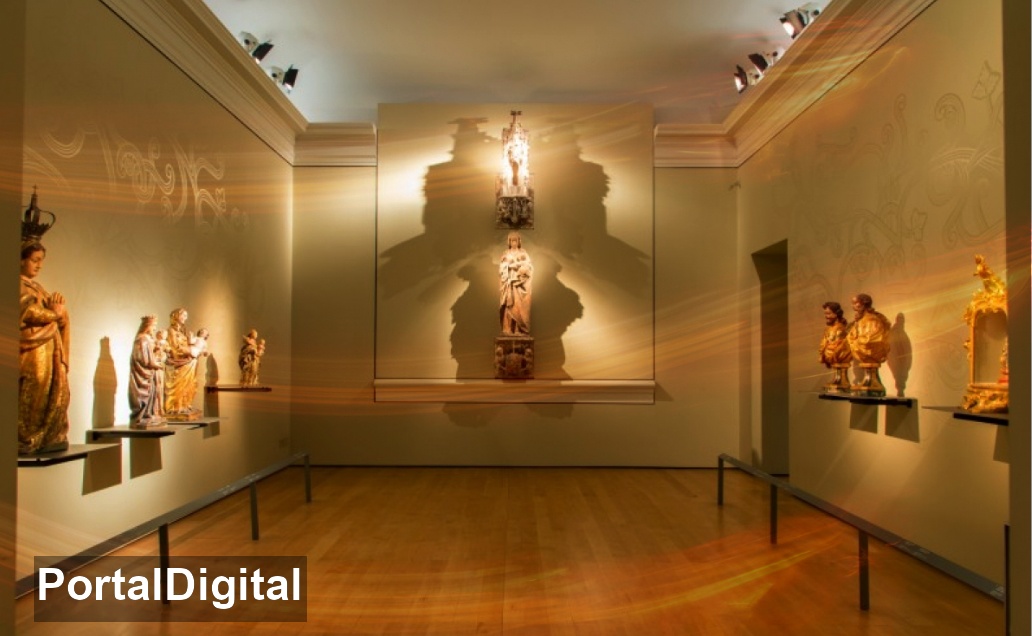
The decorative arts collections (furniture, goldsmithing, textiles, metals, Portuguese and European glass and Portuguese, European and Chinese ceramics) and the exhibition of musical instruments, means of transport, engravings, tiles, sculpture/carving and Portuguese and European painting contribute to this environment.
For these reasons, we can observe at the Biscainhos Museum not only decorative objects, but also a place where we can see the customs of noble families.
The decorative arts collections (furniture, goldsmithing, textiles, metals, Portuguese and European glass and Portuguese, European and Chinese ceramics) and the exhibition of musical instruments, means of transport, engravings, tiles, sculpture/carving and Portuguese and European painting contribute to this environment.
For these reasons, we can observe at the Biscainhos Museum not only decorative objects, but also a place where we can see the customs of noble families.
Biscainhos Palace
This Baroque House is organized on two levels. The first corresponds to the ground floor, where the utility and functional compartments are located: atrium, stables, carriage house, storage, kitchens, pantries, alcoves for servants and various storage areas. The second level concerns the main floor referring to living spaces: state and/or reception, living, sleeping, dining and prayer rooms.
Ground Floor/Atrium
The entrance functions as an intermediate space between the interior and exterior of the Palácio dos Biscainhos.
What stands out immediately is its geometrically placed grooved stone floor, which allowed carriages to enter the house and disembark passengers, then proceed to the stables located close to the garden.
Furthermore, this floor also contained the servants' compartments, the pantry and the kitchen where, even today, the old collection of pans, pots and other utensils, made of bronze, iron and copper, is preserved.
What stands out immediately is its geometrically placed grooved stone floor, which allowed carriages to enter the house and disembark passengers, then proceed to the stables located close to the garden.
Furthermore, this floor also contained the servants' compartments, the pantry and the kitchen where, even today, the old collection of pans, pots and other utensils, made of bronze, iron and copper, is preserved.
Noble Floor
The Palace's noble floor is the perfect demonstration of the lifestyle of a high society family. To get there, we find a luxurious staircase decorated with a set of figurative tiles, which serves as an announcement to the sequence of large and impressive rooms:
Entrance room or lantern that features a central skylight flanked by stucco work and tempera painting on its classic medallions. The purpose of this space was for guests to wait, comfortably, for the gentlemen of the residence.
Noble hall that is the central palatial area and a reflection of the family's social and economic condition. It is assumed that important events such as receptions and events will have taken place here. Considered the most sublime space in the building, it is decorated with baroque tiles with gallant scenes, dating back to the first quarter of the 18th century. Furthermore, the oak ceiling is covered by an oil painting, from 1724, alluding to the centenary of the death of Beato Miguel de Carvalho, a religious ancestor of the family that owned the time and martyred in the 19th century. XVII by the Japanese.
“Room with the painted ceiling” and the change in the role of women from the end of the century onwards is visible. XVIII, through the transformation of interiors: less hierarchical and more comfortable environments. As for the interior, the space is decorated with Portuguese furniture, porcelain of oriental origin and a wall clock with charão painting. Visitors are also presented with an ornamental stucco ceiling with a mythological painting of Jupiter in Council of Gods.
Music room with windows overlooking the garden, has two pianos and some tables for fun games. It is decorated with Portuguese furniture, Chinese and India Company porcelain. This space portrays the time dedicated to socializing, to the sound of music and the beat of dance, poetry and games, such as backgammon.
The dining room stands out for its varied paintings and yellow tile skirting boards. It has oriental porcelain, a cutlery and other silver and glass pieces, displayed on the various tables. The sideboard that complements the beauty of this space. As a particularity, during the visit, it is in this space that the origin of the expression “set the table” is explained.
In addition to these interior spaces, during the visit to the Biscainhos Museum, it is also possible to visit the men's and women's rooms and the 17th century room. XIX (in which a brief reference is made to a later period). The kitchen is also part of the museum itinerary, located on the lower floor of the palace.
Entrance room or lantern that features a central skylight flanked by stucco work and tempera painting on its classic medallions. The purpose of this space was for guests to wait, comfortably, for the gentlemen of the residence.
Noble hall that is the central palatial area and a reflection of the family's social and economic condition. It is assumed that important events such as receptions and events will have taken place here. Considered the most sublime space in the building, it is decorated with baroque tiles with gallant scenes, dating back to the first quarter of the 18th century. Furthermore, the oak ceiling is covered by an oil painting, from 1724, alluding to the centenary of the death of Beato Miguel de Carvalho, a religious ancestor of the family that owned the time and martyred in the 19th century. XVII by the Japanese.
“Room with the painted ceiling” and the change in the role of women from the end of the century onwards is visible. XVIII, through the transformation of interiors: less hierarchical and more comfortable environments. As for the interior, the space is decorated with Portuguese furniture, porcelain of oriental origin and a wall clock with charão painting. Visitors are also presented with an ornamental stucco ceiling with a mythological painting of Jupiter in Council of Gods.
Music room with windows overlooking the garden, has two pianos and some tables for fun games. It is decorated with Portuguese furniture, Chinese and India Company porcelain. This space portrays the time dedicated to socializing, to the sound of music and the beat of dance, poetry and games, such as backgammon.
The dining room stands out for its varied paintings and yellow tile skirting boards. It has oriental porcelain, a cutlery and other silver and glass pieces, displayed on the various tables. The sideboard that complements the beauty of this space. As a particularity, during the visit, it is in this space that the origin of the expression “set the table” is explained.
In addition to these interior spaces, during the visit to the Biscainhos Museum, it is also possible to visit the men's and women's rooms and the 17th century room. XIX (in which a brief reference is made to a later period). The kitchen is also part of the museum itinerary, located on the lower floor of the palace.
The Gardens
Outside is the famous garden. Although it does not have as much notoriety as Jardim de Santa Bárbara, it is a garden of equal sumptuousness: around 1 hectare that functions as a kind of refuge in the city center.
Like the building, the garden is in a characteristic Baroque style and its fountains and sculptures welcome those who stroll there. The space is divided into three levels, highlighting the Formal Garden, the Orchard and the Vegetable Garden, and featuring walls with guardhouses to the west.
Furthermore, it includes architectural and sculptural elements carved in granite, such as 18th century sculptures and fountains with beautiful human, animal, plant and mythological forms. It is cut into labyrinthine boxwood beds.
Roughly in the middle of the Biscainhos garden is the matriarch of the space: a Virginia Tulip Tree that is over 250 years old, the largest and oldest of its species in Portugal. Its flowers give it a fiery color, which deserves a glimpse of anyone.
The Palácio dos Biscainhos is one of the most important stately homes in Braga and, for that reason, don't miss it. On the first Sunday of each month, visiting the Museum is free.
Like the building, the garden is in a characteristic Baroque style and its fountains and sculptures welcome those who stroll there. The space is divided into three levels, highlighting the Formal Garden, the Orchard and the Vegetable Garden, and featuring walls with guardhouses to the west.
Furthermore, it includes architectural and sculptural elements carved in granite, such as 18th century sculptures and fountains with beautiful human, animal, plant and mythological forms. It is cut into labyrinthine boxwood beds.
Roughly in the middle of the Biscainhos garden is the matriarch of the space: a Virginia Tulip Tree that is over 250 years old, the largest and oldest of its species in Portugal. Its flowers give it a fiery color, which deserves a glimpse of anyone.
The Palácio dos Biscainhos is one of the most important stately homes in Braga and, for that reason, don't miss it. On the first Sunday of each month, visiting the Museum is free.