
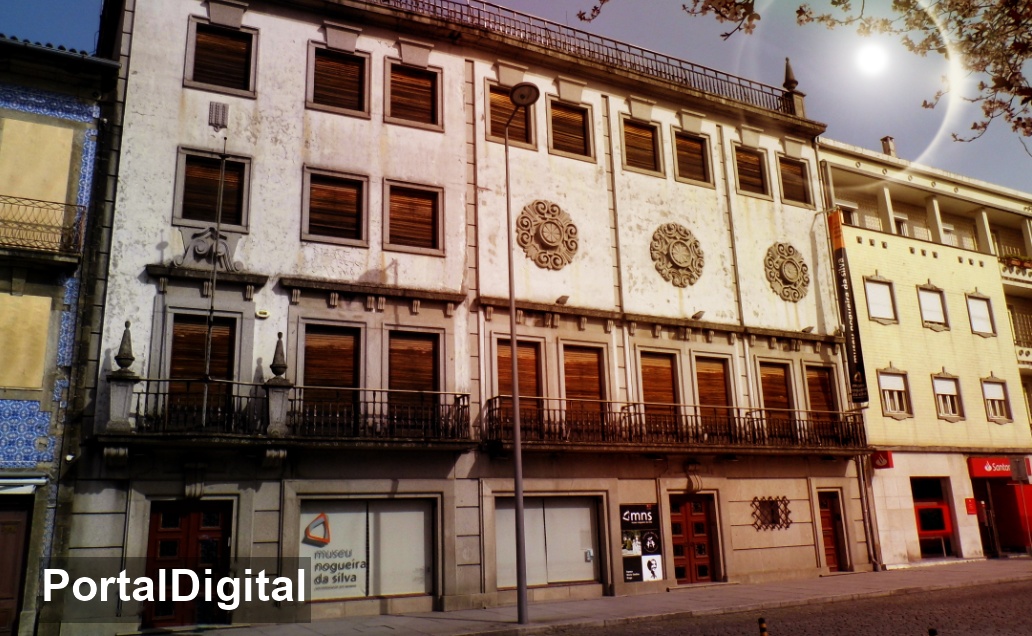
Avenida Central, in Braga
The Nogueira da Silva Museum is located on Avenida Central, in the city of Braga, northern Portugal.
The History of the Nogueira da Silva Museum
The Museum owes its foundation to the legacy made in September 1975, in favor of the University of Minho by António Augusto Nogueira da Silva (Porto, January 29, 1901 - Lisbon, October 1, 1976).
António Nogueira da Silva comes from a family from the Braga bourgeoisie linked to commerce (wool) and the financial sector (Banco do Minho and Banco Mercantil).
His fortune was built with the founding of Casa da Sorte, a company created in Braga (1933) and from this city expanded to several cities in Portugal (Porto, Lisbon, Coimbra, Setúbal, Faro, Aveiro and Viseu) and, to date, also overseas (Luanda, Lourenço Marques and Lobito).
This company was managed by its founder for several decades, even before the 25th of April 1974 he took the decision to donate it to his workers.
Originally from a family from the Braga bourgeoisie linked to commerce and finance, he developed a strong philanthropic activity, which is why he was distinguished with three commendations, several medals and honorary titles.
His civic exemplarity earned him several medals from the Portuguese Legion, 1938, 1939, 1947 and 1959, and the title of Chamberlain of Honor from Popes John XXIII, 1960, and Paul VI, 1963, and Grand Officer of the Order of Benemerence, 1964, the year in which he received the title of Honorary Citizen and the City's Gold Medal from Braga.
The Nogueira da Silva Museum is organized based on the private collection of Commander António Augusto.
It is currently an important cultural space for the University of Minho and the city of Braga that perpetuates the name of this businessman collector.
António Nogueira da Silva comes from a family from the Braga bourgeoisie linked to commerce (wool) and the financial sector (Banco do Minho and Banco Mercantil).
His fortune was built with the founding of Casa da Sorte, a company created in Braga (1933) and from this city expanded to several cities in Portugal (Porto, Lisbon, Coimbra, Setúbal, Faro, Aveiro and Viseu) and, to date, also overseas (Luanda, Lourenço Marques and Lobito).
This company was managed by its founder for several decades, even before the 25th of April 1974 he took the decision to donate it to his workers.
Originally from a family from the Braga bourgeoisie linked to commerce and finance, he developed a strong philanthropic activity, which is why he was distinguished with three commendations, several medals and honorary titles.
His civic exemplarity earned him several medals from the Portuguese Legion, 1938, 1939, 1947 and 1959, and the title of Chamberlain of Honor from Popes John XXIII, 1960, and Paul VI, 1963, and Grand Officer of the Order of Benemerence, 1964, the year in which he received the title of Honorary Citizen and the City's Gold Medal from Braga.
The Nogueira da Silva Museum is organized based on the private collection of Commander António Augusto.
It is currently an important cultural space for the University of Minho and the city of Braga that perpetuates the name of this businessman collector.
The construction of the Nogueira da Silva Museum building in Braga
The building, built in the 50s and 60s, designed by modernist architect Raul Rodrigues Lima, reveals a functionalist aesthetic and provides important spaces for cultural, protocol or other events in an environment with unique characteristics.
Collection or collection of António Nogueira da Silva
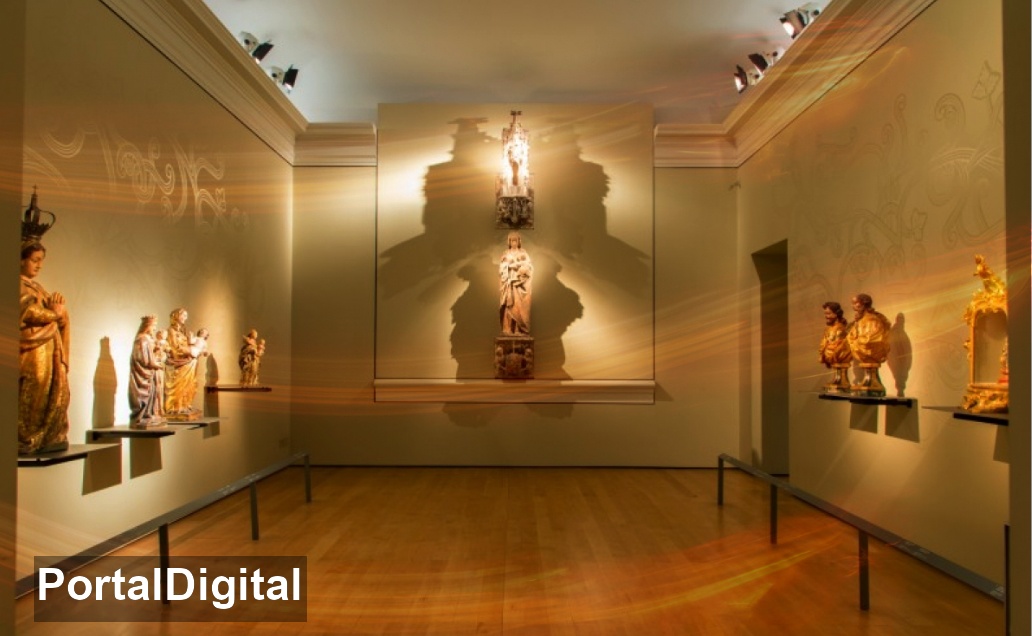
The collection he left, in September 1975, in favor of the University of Minho consists of a varied collection of painting, sculpture, furniture, tapestry, goldsmithing, porcelain, glass and earthenware, highlighting the rarity of some of its pieces and the diversity of works that make it up.
Among the countless pieces in the Museum, some of them stand out due to the rarity of this type of object in Portuguese collections, such as the "Blanc de Chine" porcelains or the Céladon porcelain stoneware pot from the Ming period or even the graceful Netzukes from the 19th century. XVIII and XIX.
The small Persian vase from the 17th century. XIV has added interest, as do the Portuguese faience dishes from the 17th century. XVII, said to be aranhões because they have in common the influence of Chinese porcelain.
The Museum has a notable collection of export china, commonly known as the India Company, including a set of emblazoned crockery, one with European figures and another with cut-out plates, Familia Rosa in the shape of a lotus flower.
Still in the group of Chinese decorative arts, the copper plates that were enameled in Canton in the 18th century and which were only intended for the European market stand out, but despite this they are quite rare in Portuguese collections.
19th century glasses. There are numerous ivories both table and decorative, among the ivories the Luso-Mogol plaque from the 17th century stands out, the pair of female sculptures made in France in the 17th century. XVIII attributed to Clodion.
The nucleus of ancient painting is certainly the most important existing in Braga in public or private collections, highlighting a Mannerist triptych from the Prague School, attributed by Luís de Moura Sobral and Costa Kaufmann to Dirk de Quade van Ravesteyn (1565/70, around 1619).
The Flemish Renaissance painting, the "Lady of the Half Orange", also attributed by Costa Kaufmann to Ambrosius Benson or follower (16th century) or the beautiful portrait of Miss Janet Nisbet, attributed to Sir Henry Raeburn (circa 1812).
In Portuguese painting, the most representative of the paintings is the "Last Supper" by André Gonçalves (1685-1762), and he was the first Portuguese painter to highlight the influence of the classicizing baroque, the Roman taste with cold colors inspired by the works of the Renaissance and Mannerism.
The various paintings by Henrique Medina, one being the portrait of the Lord by António Nogueira da Silva (1968) and another of his wife Dona Maria Eugénia Nogueira da Silva (1968).
Among the countless pieces in the Museum, some of them stand out due to the rarity of this type of object in Portuguese collections, such as the "Blanc de Chine" porcelains or the Céladon porcelain stoneware pot from the Ming period or even the graceful Netzukes from the 19th century. XVIII and XIX.
The small Persian vase from the 17th century. XIV has added interest, as do the Portuguese faience dishes from the 17th century. XVII, said to be aranhões because they have in common the influence of Chinese porcelain.
The Museum has a notable collection of export china, commonly known as the India Company, including a set of emblazoned crockery, one with European figures and another with cut-out plates, Familia Rosa in the shape of a lotus flower.
Still in the group of Chinese decorative arts, the copper plates that were enameled in Canton in the 18th century and which were only intended for the European market stand out, but despite this they are quite rare in Portuguese collections.
19th century glasses. There are numerous ivories both table and decorative, among the ivories the Luso-Mogol plaque from the 17th century stands out, the pair of female sculptures made in France in the 17th century. XVIII attributed to Clodion.
The nucleus of ancient painting is certainly the most important existing in Braga in public or private collections, highlighting a Mannerist triptych from the Prague School, attributed by Luís de Moura Sobral and Costa Kaufmann to Dirk de Quade van Ravesteyn (1565/70, around 1619).
The Flemish Renaissance painting, the "Lady of the Half Orange", also attributed by Costa Kaufmann to Ambrosius Benson or follower (16th century) or the beautiful portrait of Miss Janet Nisbet, attributed to Sir Henry Raeburn (circa 1812).
In Portuguese painting, the most representative of the paintings is the "Last Supper" by André Gonçalves (1685-1762), and he was the first Portuguese painter to highlight the influence of the classicizing baroque, the Roman taste with cold colors inspired by the works of the Renaissance and Mannerism.
The various paintings by Henrique Medina, one being the portrait of the Lord by António Nogueira da Silva (1968) and another of his wife Dona Maria Eugénia Nogueira da Silva (1968).
The Nogueira da Silva Museum in Braga
The Noble Hall is an especially pleasant space for holding events of various kinds, where it is possible to admire Aubusson tapestries from the 19th century. 17th century furniture. XVII and XVIII and some Portuguese painting from various eras.
In this space we can still see a piano, a harp and various furniture from the Museum, highlighting the fact that it allows direct access to the garden, which makes it especially appealing and unique for holding events.
In this space we can still see a piano, a harp and various furniture from the Museum, highlighting the fact that it allows direct access to the garden, which makes it especially appealing and unique for holding events.
The Jorge Barradas Room at the Nogueira da Silva Museum in Braga
Jorge Barradas was a painter, ceramist and illustrator who belongs to the 1st generation of Portuguese modernist artists and gives his name to one of the main rooms of the Nogueira da Silva Museum.
In this room we can find four sculptures by this artist and two paintings by Henrique Medina representing the owners of the house, and this space essentially functions as an auditorium.
In this room we can find four sculptures by this artist and two paintings by Henrique Medina representing the owners of the house, and this space essentially functions as an auditorium.
The Garden of the Nogueira da Silva Museum in Braga
The house has a French-inspired garden with flowerbeds surrounded by boxwood, and crowned in the background by magnolias surrounding a baroque fountain originating from an old farm in Gualtar.
In this space, several artistic objects that enhance the garden stand out: several ceramic works by Jorge Barradas, two notable and rare blue and white tile panels, made in Holland in the 18th century and the sculpture of Apollo and Dafne, a copy of the original by Bernini from the 19th century, and a copy of the São Bento fountain in the Tibães Monastery.
This large space is suitable for outdoor activities and has capacity for around two hundred people, such as musical events, celebrations and parties.
This Museum has a great and rich history due to the large number of objects and works of art that can be found both inside and outside this space.
In this space, several artistic objects that enhance the garden stand out: several ceramic works by Jorge Barradas, two notable and rare blue and white tile panels, made in Holland in the 18th century and the sculpture of Apollo and Dafne, a copy of the original by Bernini from the 19th century, and a copy of the São Bento fountain in the Tibães Monastery.
This large space is suitable for outdoor activities and has capacity for around two hundred people, such as musical events, celebrations and parties.
This Museum has a great and rich history due to the large number of objects and works of art that can be found both inside and outside this space.