
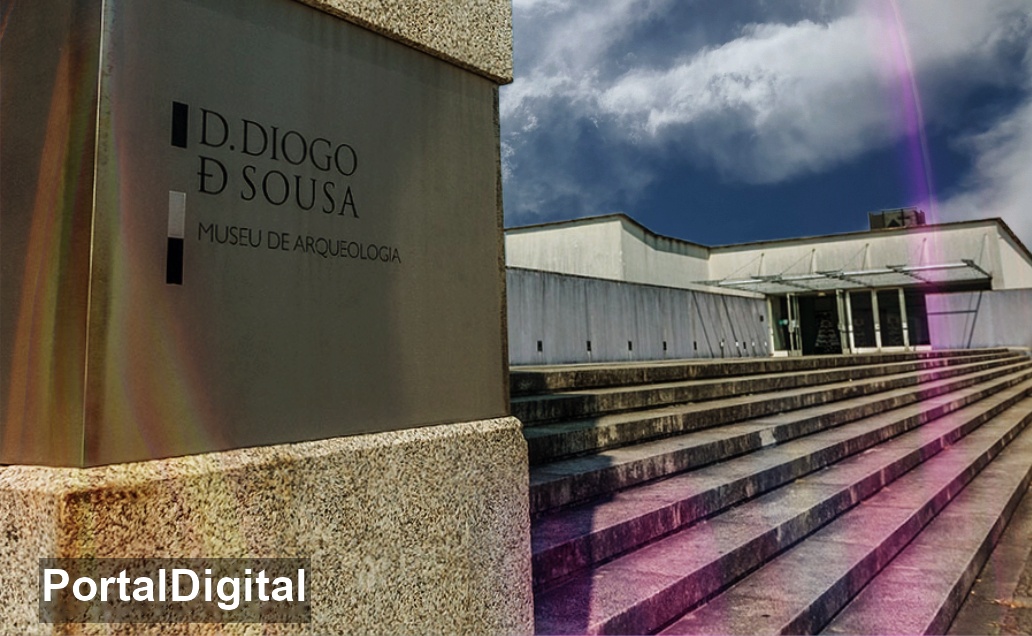
Street of Volunteer Firefighters, in Braga
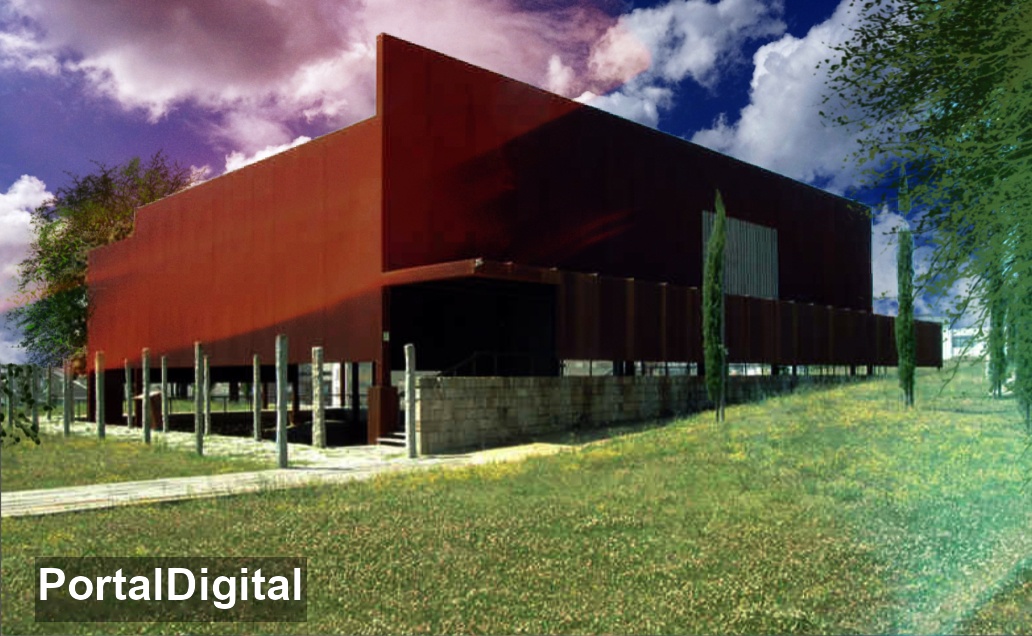
Dom Diogo de Sousa Regional Archeology Museum, Rua dos Firefighters Voluntários, city of Braga, northern Portugal.
The museum was created on March 28, 1918, then under the responsibility of the City Council and installed in the Paço Episcopal Braga.
Until the 80s of the 20th century, it never managed to ensure regular operation.
In 1980 it was finally decided to revitalize the Museum and an Installation Committee for the project was appointed (Decree-Law nº 409/80, of 27 December).
Later, Teresa Patrício Gouveia, Secretary of State for Culture of the 11th Government, launched the construction work on the museum, with the concrete structure being erected.
In 1989, the Secretary of State would be replaced by Pedro Santana Lopes, who carried out a profound reorganization of the services under his supervision. The IPPC was abolished and the IPPAR and IPM (Portuguese Institute of Museums) were created in 1992.
The then presidents of IPM, Simonetta Luz Afonso, and IPPAR, Nuno dos Santos Pinheiro, considered the museum project "The white elephant of museology", having frozen the works.
Construction would only resume in 2001, with the museum opening to the public on June 29, 2007.
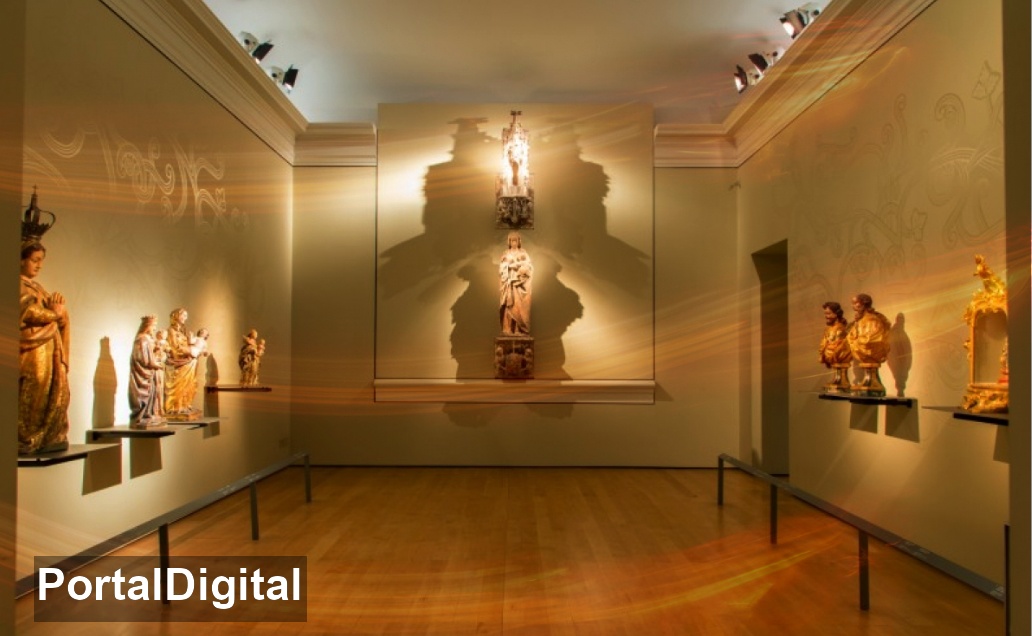
Its collection comprises archeology collections from the Northern region of Portugal, with a particular focus around Braga, whose chronology extends from the Paleolithic to medieval times.
The museum has what is considered the “best collection of milestones in all of Europe”. Those in the Capela Inventory were classified as a National Monument in 1910.
It also has thousands of coins from the High Empire and tens of thousands of numismas from the Low Empire, most of which remain to be catalogued.
Another collection concerns the photographic archive, images relating to missing architectural and archaeological monuments and ancient Roman landmarks outside the museum.
You can also visit a Roman mosaic, in the exact location where it was found.
On February 23, 2018, the museum received, by donation, the private collection of Marion Buehler-Brockhaus and Hans Peter Buehler.
The museum was created on March 28, 1918, then under the responsibility of the City Council and installed in the Paço Episcopal Braga.
Until the 80s of the 20th century, it never managed to ensure regular operation.
In 1980 it was finally decided to revitalize the Museum and an Installation Committee for the project was appointed (Decree-Law nº 409/80, of 27 December).
Later, Teresa Patrício Gouveia, Secretary of State for Culture of the 11th Government, launched the construction work on the museum, with the concrete structure being erected.
In 1989, the Secretary of State would be replaced by Pedro Santana Lopes, who carried out a profound reorganization of the services under his supervision. The IPPC was abolished and the IPPAR and IPM (Portuguese Institute of Museums) were created in 1992.
The then presidents of IPM, Simonetta Luz Afonso, and IPPAR, Nuno dos Santos Pinheiro, considered the museum project "The white elephant of museology", having frozen the works.
Construction would only resume in 2001, with the museum opening to the public on June 29, 2007.
Its collection comprises archeology collections from the Northern region of Portugal, with a particular focus around Braga, whose chronology extends from the Paleolithic to medieval times.
The museum has what is considered the “best collection of milestones in all of Europe”. Those in the Capela Inventory were classified as a National Monument in 1910.
It also has thousands of coins from the High Empire and tens of thousands of numismas from the Low Empire, most of which remain to be catalogued.
Another collection concerns the photographic archive, images relating to missing architectural and archaeological monuments and ancient Roman landmarks outside the museum.
You can also visit a Roman mosaic, in the exact location where it was found.
On February 23, 2018, the museum received, by donation, the private collection of Marion Buehler-Brockhaus and Hans Peter Buehler.