
Historic city center, in Braga
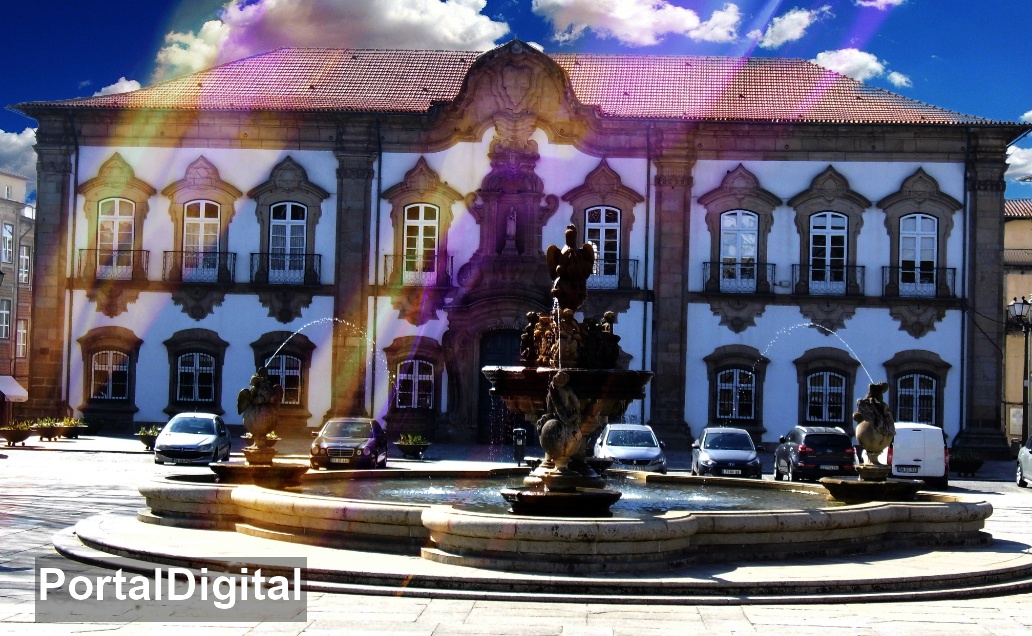
Praça do Município is a square located in the historic center of the city of Braga, in the North of Portugal.
In the second half of the 16th century, by order of Archbishop Frei Agostinho de Jesus, the square was opened in what was then called the farm and vegetable gardens of the Paço Episcopal Braga. Named Campo de Touros, the square served this purpose for decades, bullfighting.
In 1753, the old Bullring was renamed Praça do Município. In the following years, Archbishop D. Gaspar de Bragança decided to bring together the various markets in the city in the square. Thus, the square became a large open-air market until 1878, when a pavilion was opened in the northern part of the square.
In 1915, with Albano Justino Lopes Gonçalves as mayor, after the demolition of the old pavilion, a large covered iron market was built by João Moura Coutinho.
Despite being an architectural example, the market does not fit into the square, which would dictate its demolition in 1955.
In 1949, the chapel of Santo António da Praça, at the eastern top, was demolished to open Rua Ulrich, currently Rua Eça de Queiroz.
Later, with Viriato Nunes as mayor, the Pelicano Fountain was placed in the center, and the square acquired its current appearance, flanked by large trees and stone benches.
In the second half of the 16th century, by order of Archbishop Frei Agostinho de Jesus, the square was opened in what was then called the farm and vegetable gardens of the Paço Episcopal Braga. Named Campo de Touros, the square served this purpose for decades, bullfighting.
In 1753, the old Bullring was renamed Praça do Município. In the following years, Archbishop D. Gaspar de Bragança decided to bring together the various markets in the city in the square. Thus, the square became a large open-air market until 1878, when a pavilion was opened in the northern part of the square.
In 1915, with Albano Justino Lopes Gonçalves as mayor, after the demolition of the old pavilion, a large covered iron market was built by João Moura Coutinho.
Despite being an architectural example, the market does not fit into the square, which would dictate its demolition in 1955.
In 1949, the chapel of Santo António da Praça, at the eastern top, was demolished to open Rua Ulrich, currently Rua Eça de Queiroz.
Later, with Viriato Nunes as mayor, the Pelicano Fountain was placed in the center, and the square acquired its current appearance, flanked by large trees and stone benches.