
Rua Dom Paio Mendes, in Braga
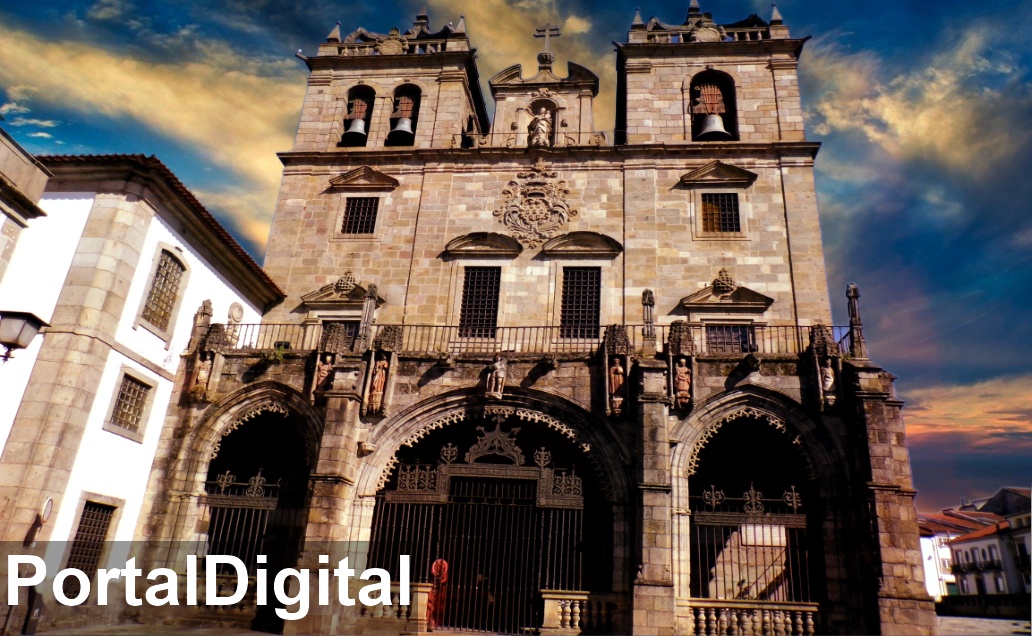
Braga Cathedral is located in the parish of Sé, city and municipality of Braga, northern Portugal.
It is the seat of the bishopric founded, according to tradition, by Saint James the Greater, who left his disciple, Saint Peter of Rates, as the first bishop here.
Portugal was not yet a country and there was already a See of Braga. The Cathedral is without a doubt the most striking building in the city. Its history is rich and abundant, made up of uninterrupted reforms and filled with evident materialism, but in fact it is its intangible heritage that elevates it to the central space it has occupied for a long time in the city.
Located in the historic center, Braga Cathedral represents a bit of the city's secular evolution. The Cathedral, as we know it today, was designed at the end of the 19th century. XI by Bishop D. Pedro. However, the cathedral was built on a site where a Roman temple dedicated to the goddess Isis is believed to have existed.
Over the years and in different periods, the Braga cathedral saw its initial plan expanded with the construction of five chapels, two cloisters, a Galilee, an Apsidiole, a transept and a sacristy. As a result, Braga Cathedral stands in a mix of styles ranging from Romanesque, Gothic and Baroque. Below we will note some of these styles.
The visit to the Cathedral unfolds into a dense plot, which we cannot help but pay attention to. The architectural details, the visit to the tombs, the visit to the Cathedral's Treasury-Museum, the mark of secular devotion that is inscribed on its walls are just some of the reasons we can mention to suggest a visit.
It is the seat of the bishopric founded, according to tradition, by Saint James the Greater, who left his disciple, Saint Peter of Rates, as the first bishop here.
Portugal was not yet a country and there was already a See of Braga. The Cathedral is without a doubt the most striking building in the city. Its history is rich and abundant, made up of uninterrupted reforms and filled with evident materialism, but in fact it is its intangible heritage that elevates it to the central space it has occupied for a long time in the city.
Located in the historic center, Braga Cathedral represents a bit of the city's secular evolution. The Cathedral, as we know it today, was designed at the end of the 19th century. XI by Bishop D. Pedro. However, the cathedral was built on a site where a Roman temple dedicated to the goddess Isis is believed to have existed.
Over the years and in different periods, the Braga cathedral saw its initial plan expanded with the construction of five chapels, two cloisters, a Galilee, an Apsidiole, a transept and a sacristy. As a result, Braga Cathedral stands in a mix of styles ranging from Romanesque, Gothic and Baroque. Below we will note some of these styles.
The visit to the Cathedral unfolds into a dense plot, which we cannot help but pay attention to. The architectural details, the visit to the tombs, the visit to the Cathedral's Treasury-Museum, the mark of secular devotion that is inscribed on its walls are just some of the reasons we can mention to suggest a visit.
Architectural Styles - Romanesque
Initially built in the Romanesque style, with thick and robust walls, the Cathedral's interior consists of three naves (one central and two lateral), a transept and a chevet with the apse surrounded by two apses.
However, this typical structure of the Romanesque style (but also of the Gothic) is not the only architectural feature of this style. The portals or capitals of the cathedral, or even the round arches inside the cathedral, are very visible landmarks of the presence of the Romanesque style.
However, this typical structure of the Romanesque style (but also of the Gothic) is not the only architectural feature of this style. The portals or capitals of the cathedral, or even the round arches inside the cathedral, are very visible landmarks of the presence of the Romanesque style.
Architectural Styles - Gothic
At the beginning of the 16th century, when D. Diogo de Sousa decided to visit the Braga Cathedral for the first time, he came across a chevet that he considered too small for the magnitude of the cathedral. As such, and without hesitation, he commissioned master João de Castilho to build a headboard worthy of the size of the Cathedral of Braga. Thus was born the Gothic-style headboard still present in the cathedral today. Inside the church, the front of the main altar also presents these features, although more in a flamboyant Gothic style, the final phase of that style.
Architectural Styles - Baroque
In the century. In the 18th century, the Baroque style invaded the city of Braga and the Cathedral was no exception. As a result, the paintings, gilded carvings and highly crafted wood stand out when visiting the cathedral. These Baroque features are currently concentrated in a relatively small area. But it wasn't always like that. In the 30s and 50s of the century. XX, in a restoration effort, the General Directorate of National Buildings and Monuments decided to restore the cathedral's more medieval and original air.
Even so, the two huge organs present, right next to the entrance and at the level of the high choir, do not let us forget the importance that the Baroque had in the Braga Cathedral.
In the century. In the 18th century, the Baroque style invaded the city of Braga and the Cathedral was no exception. As a result, the paintings, gilded carvings and highly crafted wood stand out when visiting the Cathedral. These Baroque features are currently concentrated in a relatively small area. But it wasn't always like that. In the 30s and 50s of the century. XX, in a restoration action, the General Directorate of National Buildings and Monuments decided to restore the Cathedral's more medieval and original air.
Even so, the two huge organs present, right next to the entrance, do not let us forget the importance that the Baroque had in the Braga Cathedral.
Even so, the two huge organs present, right next to the entrance and at the level of the high choir, do not let us forget the importance that the Baroque had in the Braga Cathedral.
In the century. In the 18th century, the Baroque style invaded the city of Braga and the Cathedral was no exception. As a result, the paintings, gilded carvings and highly crafted wood stand out when visiting the Cathedral. These Baroque features are currently concentrated in a relatively small area. But it wasn't always like that. In the 30s and 50s of the century. XX, in a restoration action, the General Directorate of National Buildings and Monuments decided to restore the Cathedral's more medieval and original air.
Even so, the two huge organs present, right next to the entrance, do not let us forget the importance that the Baroque had in the Braga Cathedral.
Tombs
Other major points of interest in the Braga Cathedral are the parents of D. Afonso Henriques, the first King of Portugal. In the Kings Chapel, in one of the 5 chapels present in the complex (built in the 13th century), there are the tombs of D. Henrique de Borgonha and D. Teresa de Leão.
D. Afonso of Portugal, son of King D. João I, Master of Avis, also has his tomb in the Cathedral. Archbishops D. Diogo de Sousa (the person who ordered the construction of the head of the Cathedral) also lies in the Cathedral, in the chapel of Nossa Senhora da Piedade, while Archbishop Gonçalo Pereira is in the Chapel of Nossa Senhora da Glória.
D. Afonso of Portugal, son of King D. João I, Master of Avis, also has his tomb in the Cathedral. Archbishops D. Diogo de Sousa (the person who ordered the construction of the head of the Cathedral) also lies in the Cathedral, in the chapel of Nossa Senhora da Piedade, while Archbishop Gonçalo Pereira is in the Chapel of Nossa Senhora da Glória.
Treasury-Museum of the Cathedral
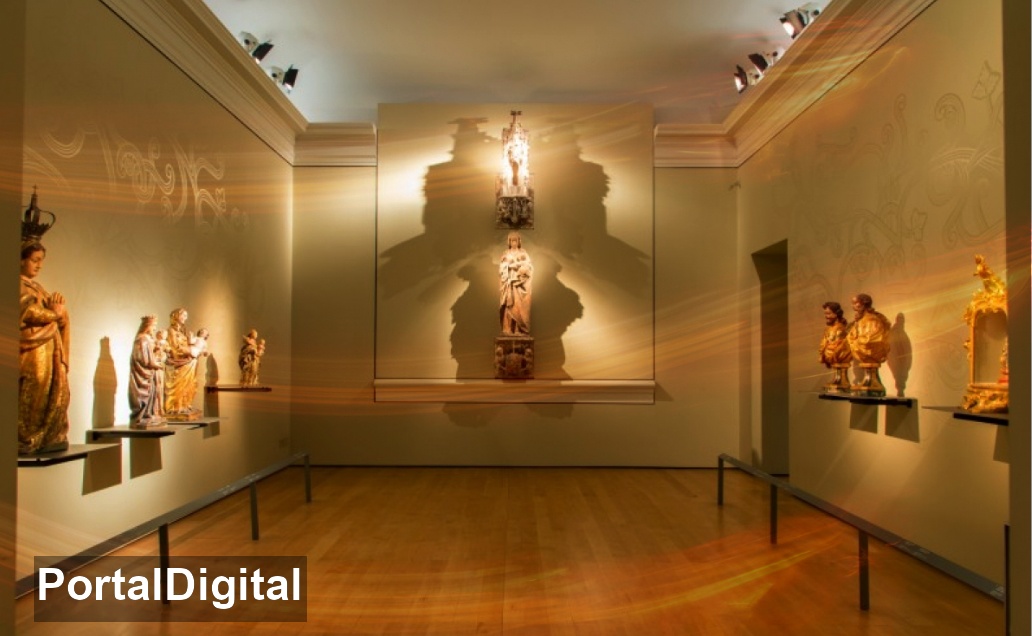
In 1930, given the large collection of pieces accumulated over centuries, the Cathedral Museum-Treasury was created, which is located on the premises of the Cathedral. One of the pieces inside the museum is a cross that was used in the first mass held in Brazil, carried by Pedro Álvares Cabral.
For all this, the Braga Cathedral constitutes an authentic time machine that transports us through centuries and centuries of history. However, it does not do so through esoteric elements or fantastic narratives but through the reading that it allows us to do about architecture, religion and art itself.
For all this, the Braga Cathedral constitutes an authentic time machine that transports us through centuries and centuries of history. However, it does not do so through esoteric elements or fantastic narratives but through the reading that it allows us to do about architecture, religion and art itself.