
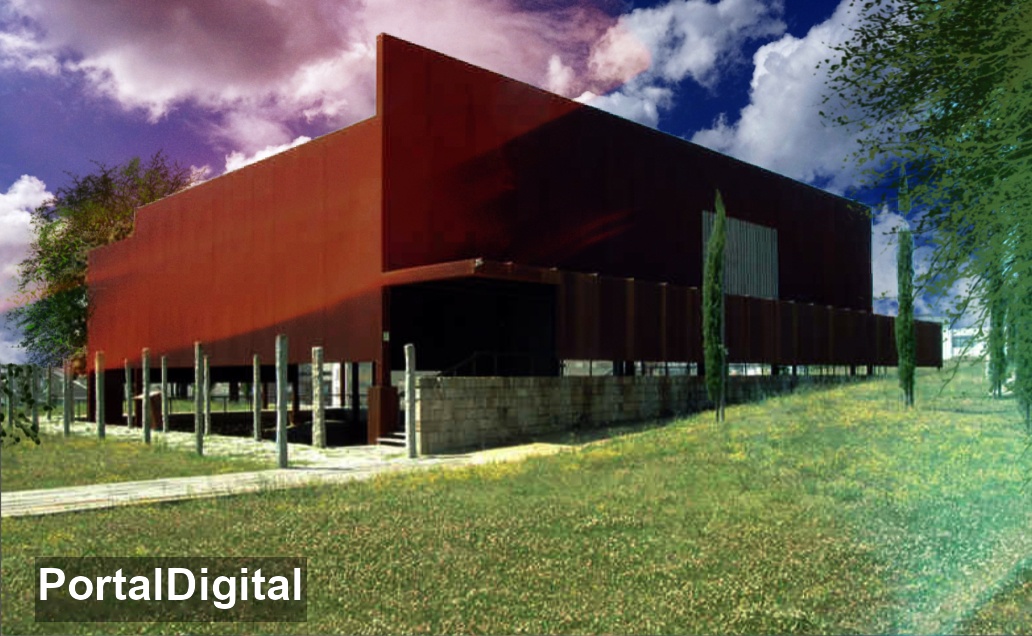
D. Diogo Sousa archaeological museum, in Braga
The Roman Baths of Alto da Ctividade are located close to the D. Diogo Sousa archaeological museum, in the city of Braga, northern Portugal.
History of the Roman Baths of Maximinos or Alto da Ctividade
These baths are a large bath complex made up of valuable ruins, which have an attached theater dating back to the 2nd century AD.
These thermal baths were discovered during excavations carried out in Catividade (a small parish in the municipality of Braga) during 1977.
These public baths were large buildings used by the city's inhabitants and visitors.
According to Roman regulations, bathers must begin by rubbing oil on their body and practicing various gymnastic exercises.
Later, he would enter a type of sauna after washing in another room and could enjoy dips in the pool with very cold water and to finish, the bather would receive a massage with aromatic oils.
These thermal baths were discovered during excavations carried out in Catividade (a small parish in the municipality of Braga) during 1977.
These public baths were large buildings used by the city's inhabitants and visitors.
According to Roman regulations, bathers must begin by rubbing oil on their body and practicing various gymnastic exercises.
Later, he would enter a type of sauna after washing in another room and could enjoy dips in the pool with very cold water and to finish, the bather would receive a massage with aromatic oils.
Recent Archaeological Excavations at the Roman Baths
In 1977, archaeological excavations at the site uncovered the ruins of a public bath next to the "Forum" of the ancient Roman city of "Bracara Augusta", located, according to tradition, in the current Largo de Paulo Orósio.
In ancient Rome, public baths were vast buildings prepared to provide the city's inhabitants or visitors with the possibility of bathing in accordance with the rules prescribed by the medicine of the time.
According to these traditions, the bather must start by applying oils to their body and practicing some gymnastic exercises such as sports or wrestling.
He then entered a very heated room, the sweat room, where he sweated profusely.
He would then go to the “caldarium”, a heated room where he could wash and remove the remaining oil.
After a short stay in the tepidarium, he would dive into the “frigidarium” pool, whose ice-cold water invigorated his body, after which he would be massaged and smeared with aromatic oils.
The excavated area of the bath occupies around 850 square meters.
These baths were, however, larger, as can be seen by the presence of the hypocaust and swimming pool to the south, separated from the rest of the building by a narrow corridor.
According to the findings, they were built at the end of the 1st century (Flavian period), with the testimony of the four hot rooms whose hypocausts are relatively well preserved from this period remaining.
It has not yet been possible to define its internal circuit or the function of some of its attached compartments.
At the end of the 4th century and the beginning of the following century, the building underwent major renovations and its surface was greatly reduced.
In ancient Rome, public baths were vast buildings prepared to provide the city's inhabitants or visitors with the possibility of bathing in accordance with the rules prescribed by the medicine of the time.
According to these traditions, the bather must start by applying oils to their body and practicing some gymnastic exercises such as sports or wrestling.
He then entered a very heated room, the sweat room, where he sweated profusely.
He would then go to the “caldarium”, a heated room where he could wash and remove the remaining oil.
After a short stay in the tepidarium, he would dive into the “frigidarium” pool, whose ice-cold water invigorated his body, after which he would be massaged and smeared with aromatic oils.
The excavated area of the bath occupies around 850 square meters.
These baths were, however, larger, as can be seen by the presence of the hypocaust and swimming pool to the south, separated from the rest of the building by a narrow corridor.
According to the findings, they were built at the end of the 1st century (Flavian period), with the testimony of the four hot rooms whose hypocausts are relatively well preserved from this period remaining.
It has not yet been possible to define its internal circuit or the function of some of its attached compartments.
At the end of the 4th century and the beginning of the following century, the building underwent major renovations and its surface was greatly reduced.
The Classification of Roman Baths
They are classified as a National Monument by Decree No. 1/86, published in DR, I Series, No. 2, of January 3, 1986.