
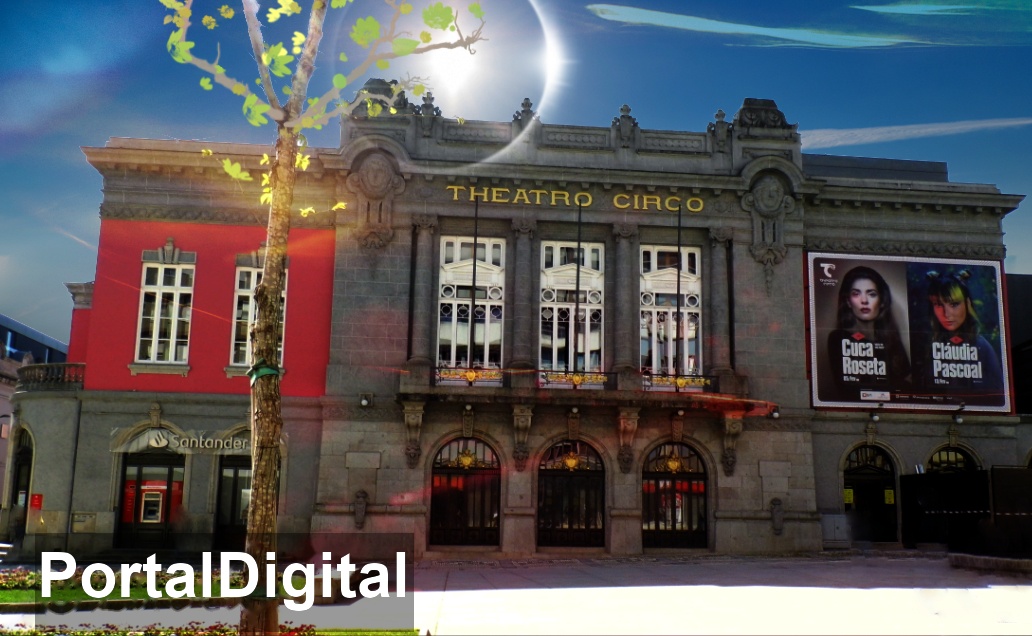
Avenida da Liberdade, in Braga
Theatro Circo is located on Avenida da Liberdade, city of Braga, northern Portugal.
Theatro Circo's more than 100-year history is a rollercoaster of triumphs and uncertainties.
Its beginnings were auspicious, in keeping with the glamor experienced in the 20s and 30s, and the 60s and 70s, as a result of modern threats such as television, resulted in some decline.
The 80s and 90s were saved by the council's acquisition and the renaissance based on requalification works that ensured the performance hall would last for many good years.
Theatro Circo's more than 100-year history is a rollercoaster of triumphs and uncertainties.
Its beginnings were auspicious, in keeping with the glamor experienced in the 20s and 30s, and the 60s and 70s, as a result of modern threats such as television, resulted in some decline.
The 80s and 90s were saved by the council's acquisition and the renaissance based on requalification works that ensured the performance hall would last for many good years.
The Emergence of Theatro Circo
The inauguration of Theatro Circo took place on April 21, 1915, but its history begins a little earlier. In 1906, Artur José Soares, José António Veloso and Cândido Martins led the team that wanted to provide Braga with a large room.
The demand was only satisfied by the Teatro São Geraldo, (located where the Bank of Portugal is today) and it was time to give another dimension to the city.
In 1911, the project, designed by João de Moura Coutinho, began and, four years later, Theatro Circo saw the light of day.
The demand was only satisfied by the Teatro São Geraldo, (located where the Bank of Portugal is today) and it was time to give another dimension to the city.
In 1911, the project, designed by João de Moura Coutinho, began and, four years later, Theatro Circo saw the light of day.
The first show and the consolidation of Theatro Circo
The inaugural show was the play “A Rainha das Rosas”, with Palmira Bastos as the protagonist. A month or so later, between May 27th and June 13th, the theater gave way to the circus, run by W. Frediani's Equestrian Company.
In the years that followed, under the management of Teatro Sá de Bandeira, Theatro Circo enjoyed great splendor with operas by Puccini and Verdi.
At a local level, the Braga Symphony Orchestra and the Orfeão de Braga were also developing.
The Braga audience that was awakening to culture grew at a great pace.
In the 1920s, the main room was expanded and other spaces, such as the Noble Hall, were built.
In the years that followed, under the management of Teatro Sá de Bandeira, Theatro Circo enjoyed great splendor with operas by Puccini and Verdi.
At a local level, the Braga Symphony Orchestra and the Orfeão de Braga were also developing.
The Braga audience that was awakening to culture grew at a great pace.
In the 1920s, the main room was expanded and other spaces, such as the Noble Hall, were built.
The “sound cinema” revolution
In the 1930s, “sound cinema” arrived in force and marked a small revolution in the shows on display at Theatro Circo. From that moment on, the more traditional arts began to lose ground, as a premonition for the decline that Theatro Circo would later see.
Now under new management by José Luís Costa, emblematic films such as “As Pupilas do Senhor Retor” (1935), “Aldeia da Roupa Branca” (1939), “Amor de Perdição” (1943), “O Leão da Estrela” (1948) or “Frei Luís de Sousa” (1950) played in the theater.
In the 1950s, the theater was losing more and more audiences, and although some musical shows brought in names such as Amália Rodrigues, the Vienna National Orchestra or the London Opera, the difficulties continued to grow.
At the end of the 1950s, a report from the General Assembly of Theatro Circo already pointed to the existence of a crisis, resulting from the installation of TVs in cafes.
In the 70s, with the explosion of televisions, it made the profitability of Theatro Circo extremely difficult and, therefore, the management of Theatro Circo decided to sell the Bristol café to a Bank, a situation that still exists today.
At the end of the 80s, the chamber acquired Theatro Circo, at a time when the Braga Theater Company was already responsible for artistic direction.
During the 90s, the eclectic programming in music, classical dance, contemporary dance and opera brought notable names to Theatro Circo: Reggiani, Juliette Greco, Fausto, Sérgio Godinho or Madredeus, in music; “Russian Army Ballet”, “Kiev Opera”, and pieces such as “Swan Lake”, in classical dance; Olga Roriz and Vera Maintaino in contemporary dance and “A Fluta Mágica”, “Carmen” or “Madame Butterfly” in opera.
Now under new management by José Luís Costa, emblematic films such as “As Pupilas do Senhor Retor” (1935), “Aldeia da Roupa Branca” (1939), “Amor de Perdição” (1943), “O Leão da Estrela” (1948) or “Frei Luís de Sousa” (1950) played in the theater.
In the 1950s, the theater was losing more and more audiences, and although some musical shows brought in names such as Amália Rodrigues, the Vienna National Orchestra or the London Opera, the difficulties continued to grow.
At the end of the 1950s, a report from the General Assembly of Theatro Circo already pointed to the existence of a crisis, resulting from the installation of TVs in cafes.
In the 70s, with the explosion of televisions, it made the profitability of Theatro Circo extremely difficult and, therefore, the management of Theatro Circo decided to sell the Bristol café to a Bank, a situation that still exists today.
At the end of the 80s, the chamber acquired Theatro Circo, at a time when the Braga Theater Company was already responsible for artistic direction.
During the 90s, the eclectic programming in music, classical dance, contemporary dance and opera brought notable names to Theatro Circo: Reggiani, Juliette Greco, Fausto, Sérgio Godinho or Madredeus, in music; “Russian Army Ballet”, “Kiev Opera”, and pieces such as “Swan Lake”, in classical dance; Olga Roriz and Vera Maintaino in contemporary dance and “A Fluta Mágica”, “Carmen” or “Madame Butterfly” in opera.
Requalification Works
In 1999, work began on requalifying the space, maintaining the original architecture.
The depth of the works kept Theatro Circo closed for 7 years, but this long period of abstinence brought with it new rooms, a museum space, a bookstore, a restaurant and a café-concert.
On October 27, 2006, the honor of the inauguration fell to the Czech National Symphony Orchestra and in just 1 year, 114 shows were held, divided into 178 sessions, seen by 70,000 people.
Currently, the main room has space for 897 people, the small auditorium for 236 and the main hall measuring 205 m2 to around 200.
The program is full of events ranging from music, theater, cinema, exhibitions, among many others.
The depth of the works kept Theatro Circo closed for 7 years, but this long period of abstinence brought with it new rooms, a museum space, a bookstore, a restaurant and a café-concert.
On October 27, 2006, the honor of the inauguration fell to the Czech National Symphony Orchestra and in just 1 year, 114 shows were held, divided into 178 sessions, seen by 70,000 people.
Currently, the main room has space for 897 people, the small auditorium for 236 and the main hall measuring 205 m2 to around 200.
The program is full of events ranging from music, theater, cinema, exhibitions, among many others.